Support from kindergarten to education
Overall, we support more than 2,000 children every day through our projects
Our locations
Our project work on the ground aims for long-term change – with education, care and social entrepreneurial thinking.
Become independent of donations!
Our locations in Namibia and Zimbabwe rely on sustainable approaches: We promote local initiatives, strengthen entrepreneurial thinking and create opportunities for people on the ground. Small steps lead to meaningful change – driven by education, commitment and a strong sense of community. In the long term, this enables people to build their own sources of income and reduce dependencies.
Become independent of donations!
Our locations in Namibia and Zimbabwe rely on sustainable approaches: We promote local initiatives, strengthen entrepreneurial thinking and create opportunities for people on the ground. Small steps lead to meaningful change – driven by education, commitment and a strong sense of community. In the long term, this enables people to build their own sources of income and reduce dependencies.
Become independent of donations!
Our locations in Namibia and Zimbabwe rely on sustainable approaches: We promote local initiatives, strengthen entrepreneurial thinking and create opportunities for people on the ground. Small steps lead to meaningful change – driven by education, commitment and a strong sense of community. In the long term, this enables people to build their own sources of income and reduce dependencies.
Otavi
Social steps
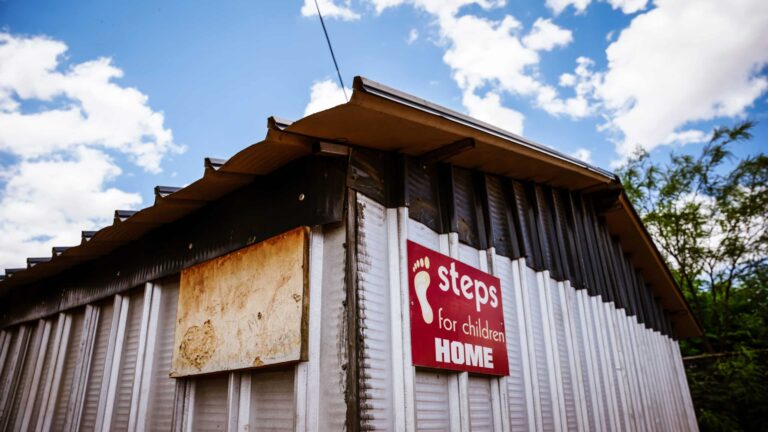
- steps homes
- Guardian Angel Program
Okakarara
Social steps
- Crèche, kindergarten, pre-school
- Afternoon care
- Soup kitchen
- Guardian angel programme
Income-generating steps
- Sewing workshop
- Guest house
- Vegetable cultivation
Okahandja
Social steps
- Kindergarten, preschool
- Soup kitchen
- Afternoon care
- Guardian angel programme
Income-generating steps
- Chicken breeding with solar incubator (now handed over to the employees of Ileni T.)
Windhoek
Social steps
- Kindergarten, preschool
- Soup kitchen
Gobabis
Social steps
- Soup kitchen (Light for the Children)
- Childcare centre (steps/LftC), kindergarten (steps/LftC),
preschool (steps/LftC) - Afternoon care (steps)
- Guardian angel programme (steps)
- steps homes (steps)
Income-generating steps
- Guest house
Rehoboth
Social steps
- Crèche, kindergarten, preschool
- Soup kitchen
- After-school care
- Guardian Angel Program
Income-generating steps
- Rental apartments
Mutare
Social steps
- Infrastructure: Construction of 4 ECCD centers* with school building, separate toilets, well and garden
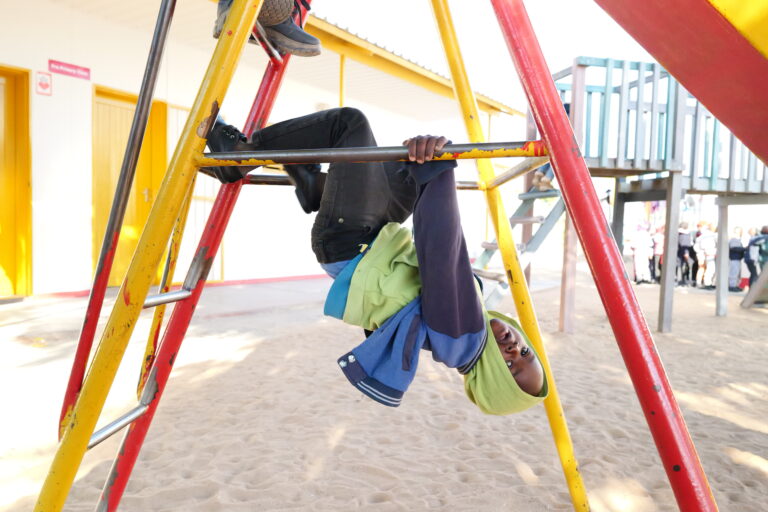
- Early childhood development: Play equipment such as swings and climbing frames
- Child protection: Events on parenting, protection and birth registration with 175 participants
- Water access: 3 wells provide drinking water and irrigation for the vegetable gardens
- Hygiene: Clean water improves hygiene and prevents diseases
- Health: Health checks for 70 children, education on hygiene in communities
- Impact: 192 children now attend the 4 preschool centres
Income-generating steps
- Poultry farming with solar incubator
- Vegetable cultivation
*Early Childhood Care and Development Centres
Mutasa
Social steps
- Infrastructure: Construction of 4 ECCD centres* with school building, separate toilets, well and garden
- Early support: play equipment such as swings and climbing frames
- Child protection: events on parenting, protection and birth registration with 175 participants
- Water access: 3 wells provide drinking water and irrigation for the vegetable gardens
- Hygiene: Clean water improves hygiene and prevents diseases
- Health: Health checks for 70 children, hygiene education in communities
- Impact: 192 children now attend the 4 pre-school centres
*Early Childhood Care and Development Centres
Our system of action
Shaping the future together – education, safety and prospects for disadvantaged children in Namibia and Zimbabwe.
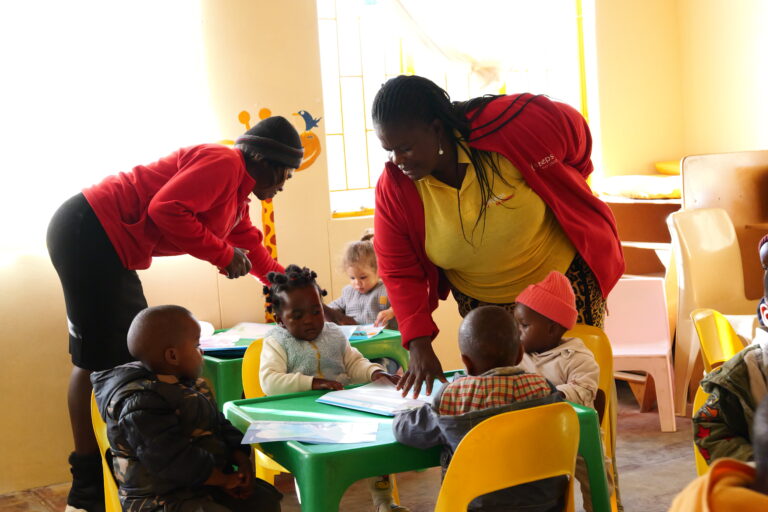
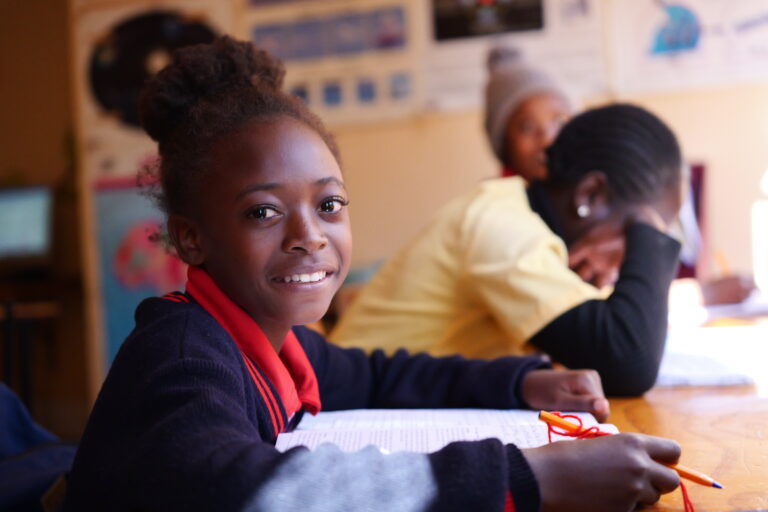
Enabling better educational opportunities – this is what we have set out to achieve with the social measures at steps for children. In steps-owned educational facilities as well as with local educational institutions, more than 2,000 disadvantaged children and young people from the poor neighborhoods in Namibia and Zimbabwe are supported five days a week. steps ensures the fulfillment of basic human needs: security, nutrition, stability.
In Namibia, steps for children is represented at six locations with a total of eight projects. Whether with local partner organizations or in its own center in Okakarara – our projects are always carried by people from the local community. This builds trust, makes use of existing structures and enables a deeper understanding of cultural particularities. In this way, our initiatives have a sustainable impact and operate on an equal footing. But steps supports the projects not only financially, but also through business expertise and advisory activities. In addition, teacher and staff meetings as well as training sessions are regularly initiated by steps, which establishes a high quality standard.
Social steps
Prospects for the future.
The non-profit foundation in Namibia stands for both social steps and income-generating steps. Our so-called social steps are facilities that care for, support and promote children and young people from the poorest backgrounds. The foundation helps through your donations where it is needed most and thus enables every steps child to have a warm meal and a sense of security – a second home.
Soup kitchen
Day nurseries
Kindergartens
Preschool
Afternoon care
step homes
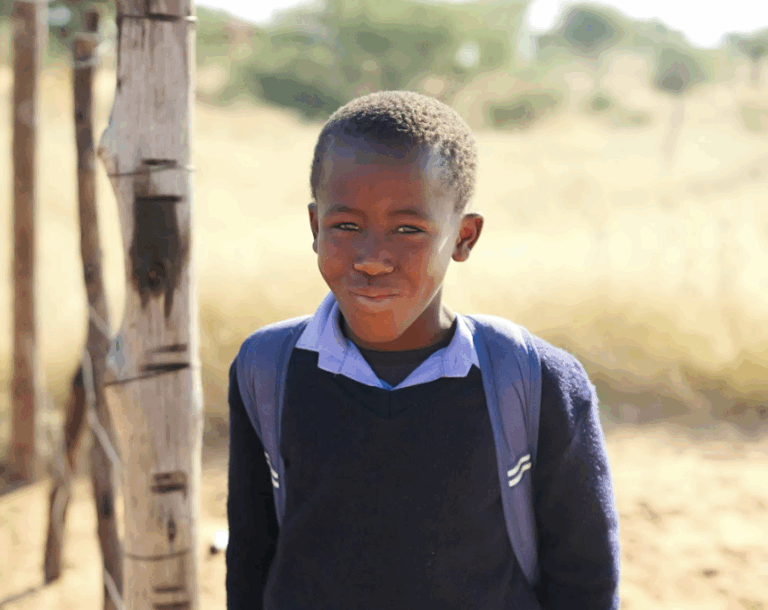
Guardian angel programme
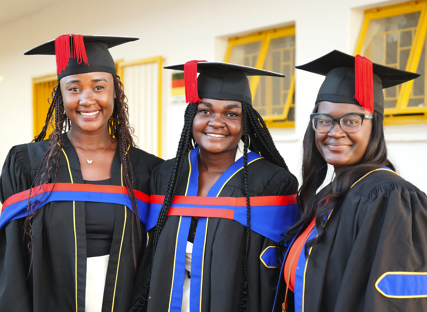
steps students
“I find it particularly positive that the project
is well on its way to becoming independent and does not merely
rely on donations being sufficient.”
Maximilian Muhle
Volunteer in Okakarara
„Here in Eppendorf, you grow up in such a feel-good oasis. You hear about the problems, but you can't really imagine them. And although, well, how do you put this... even though they lead a completely different life to us and are among the poorest people in the world, they are still happy and cheerful.“
Paul Zeller
Former student council president at Eppendorf Gymnasium
Income-generating steps
Becoming independent from donations in the long term
Income-generating steps are measures through which the steps for children foundation partially finances social steps – that is, its own social facilities such as nurseries, preschools and soup kitchens. Once the ongoing costs of the small business are covered, 100% of the surplus from the income flows, without any deductions, into the social steps of the facilities in Namibia.
Our long-term goal is to become less dependent on donations. We create a social return through improvements in the lives of local people. We support them in developing skills to overcome their challenges and bring about change. Through the small businesses established in Namibia, steps for children creates training and employment opportunities and helps local people generate their own income. Jobs in their own country thus support the economic cycle and address the root causes of displacement (primarily in Zimbabwe), so that our organization sustainably helps the local population and offers opportunities for an independent future.
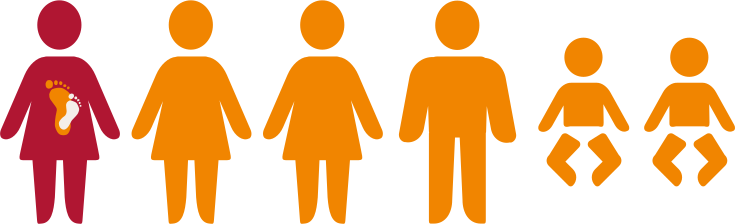
Through the salary of one of our employees, an average of
five additional family members are fed.
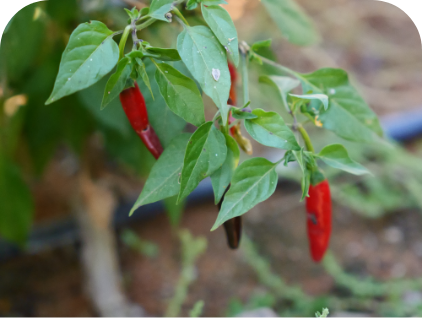
Vegetable cultivation
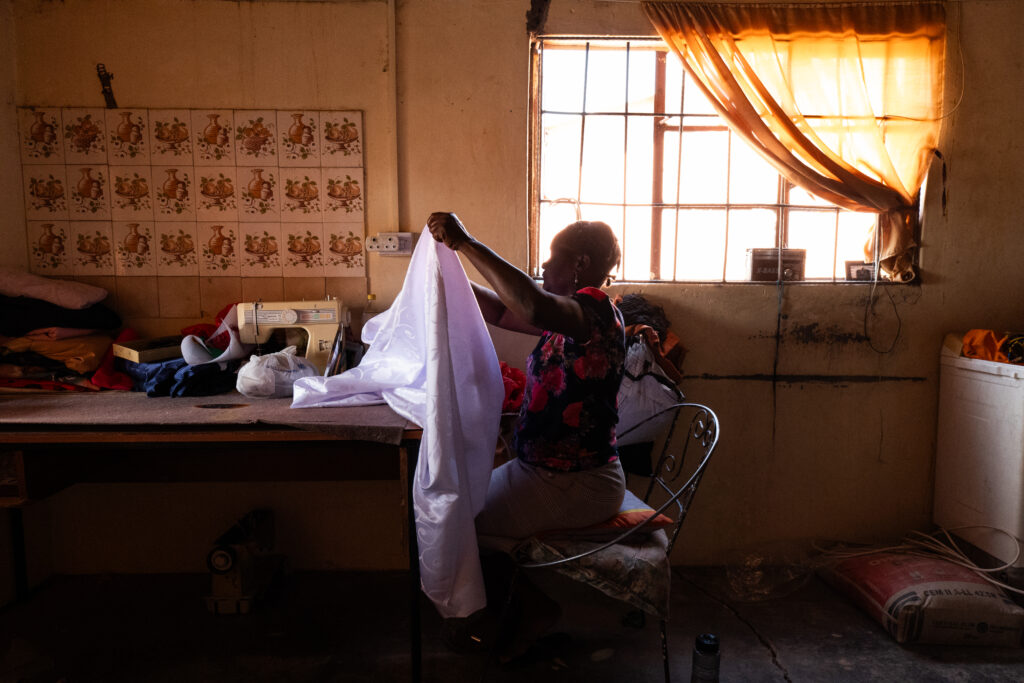
Sewing workshop
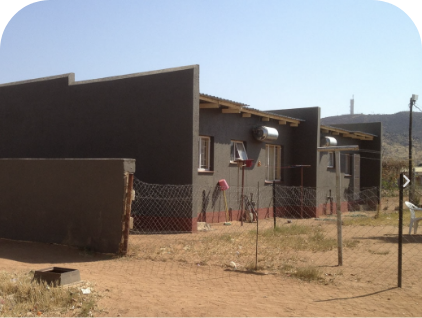
Rented flats
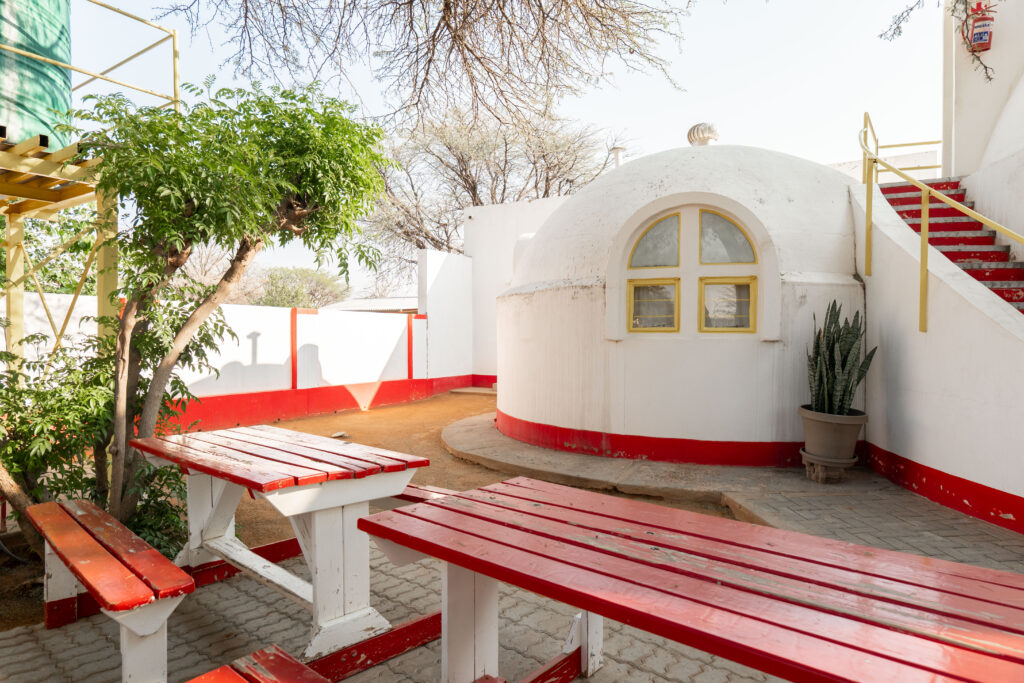
Guest houses
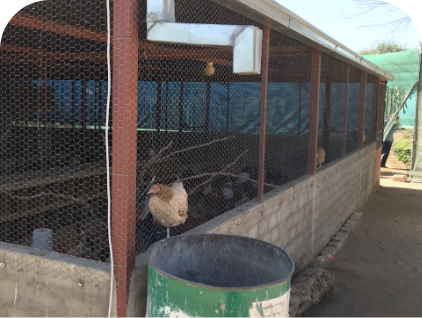
Chicken breeding
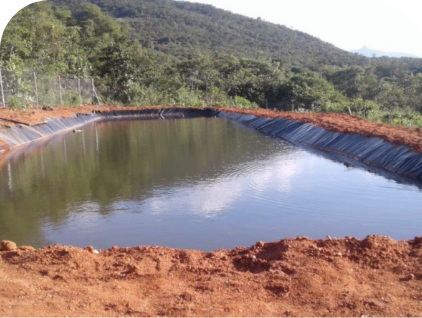
Fish ponds