A great idea was born in Gobabis: two students return to Hamburg from Namibia full of enthusiasm and establish a Fairtrade group. Marie Schnaidt conducted an interview with Paul Zeller and Jona Schües for us and summarised the exciting journey of the two for us:
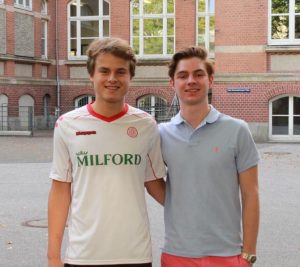
In Gobabis, a small town in Namibia with 32,000 inhabitants, our foundation runs a steps homes programme, which was visited in autumn 2017 by a group of pupils from the Gymnasium Eppendorf. A trip none of them will forget so quickly, because it is the first time they are directly and consciously confronted with the difference between rich and poor: „Here in Eppendorf, you grow up in such a comfort zone. You hear about the problems, but you really can’t imagine it. And although, well how should I put it now… although they lead a completely different life from ours and belong to the poorest people in the world, they are still happy and cheerful.“ 17-year-old school spokesperson Paul Zeller describes his impression. Jona Schües agrees with him and notices the increasing resignation of the slightly older ones.
steps manages to offer the children a carefree time in which they can be happy and cheerful. New jobs counteract hopelessness, education and training for children and young people create a future perspective that fights against the resignation of older generations.
Through Mr Grote, their former class teacher, who has been committed since 2003 to helping people in need – whether far away or in the neighbourhood – with the social school association „Hege Helping Hands“, they, together with other pupils, get the chance to provide valuable on-site help in Namibia.
Paul and Jona build huts that meet the requirements in Gobabis: they must be water-, wind- and weatherproof, and the floor must be paved with cobblestones.
Video:
Their zest for action attracts many children who are not fortunate enough to attend school: queues quickly form on their own to the huts, for example to transport the sand or pass smaller stones.
Another group takes care of the interior fittings of the huts: ten cupboard-table combinations are created in the steps carpentry workshop. Trained steps carpenters are on hand to help them.
„Sometimes we had music with us while working and that encouraged people to dance and to help out too.“ reports Jona.
To secure funding for the ten accommodations, the group raises money throughout the year in Germany. The accommodations they build on their trip are intended for families from the townships who agree to take in orphaned children. In this case, they receive holistic support from the steps for children foundation – these are our steps homes families.
 It is clear from the two pupils that they have gained a lot of new experiences and have dealt with them extensively. It awakens in them the desire to, like the foundation steps for children, counter the situation with something of their own. In the two weeks in Gobabis, overwhelmed by the daily impressions and experiences, the evenings outweigh, when Paul and Jona meet up with Mr Grote. They think intensively about ideas that help people in developing countries, bring about change in the long term and sustainably, and can be implemented from Hamburg. An idea that can be reconciled with the pupils’ current living conditions. They decide they have to do something from home. Because they realise that their work helps, has value, and they experience how grateful people are to them.
With the idea of founding a Fairtrade group at their school, they return from Gobabis to Hamburg. Through an appeal at school, they look for support from students and teachers – and are not disappointed: among the 850 students at Eppendorfer Gymnasium, they find several who would like to help get this student initiative off the ground. Every Wednesday, the Fairtrade group meets for an hour to work on a comprehensive concept (see below). For Paul and Jona, this is of course only a fraction of the time they devote to it. A great deal of their free time goes into the project. But they take that in stride. For both of them, it is clear that they will continue to get involved.

The Fairtrade working group can rely on two highly committed teachers: „Without these teachers, all our work would not be possible.“ Paul admits.
The working group has prepared a two-hour lesson as an introduction to the topic for the whole school, which is taught in every class on action day. On the evening of this action day, a panel discussion with selected guests from Germany’s Fairtrade sector takes place and provides pupils, parents and teachers with comprehensive information on the topic.
The crowning finale of the day is a Fairtrade fashion show, which even attracts many non-involved pupils to school voluntarily.
The Fairtrade group is developing the following concept:
Introduction of the project at school, raising classmates’ awareness of the issue, justification for the Fairtrade AG
- Fairtrade Point
It will soon replace the school kiosk with fair snacks (fair-trade chocolate, bars, Lemonaid etc.)
- Fair Trade in the Classroom
Fair trade is discussed in lessons, embedded in the curriculum, cooperation with the teaching staff
Their school will soon officially be a Fairtrade School.
This means the school fulfils five criteria and then receives a Fairtrade seal. Your aim is to reach as many people as possible through the project and to encourage awareness of how they can actively help shape world trade through their own consumer behaviour. You want to show ways people can get involved and hope that your classmates will be able to bring the Fairtrade idea into their future jobs.
Many thanks to Paul and Jona for the conversation, and we wish you lots of success with the Fairtrade AG!