There was already a lot to do before Corona
Christine Leege, social pedagogue and head of her own daycare centre in Norderstedt, honoured as “KITA21 – the shapers of the future”, was back in Gobabis before the coronavirus crisis began and worked here as a social pedagogue. In her report, she describes her impressions and the developments on site.


So, what is the project like this year?
The economic situation in Namibia is also partly difficult at the beginning of this year: long periods of drought in recent years and the heavy rain at the beginning of this year have had a major economic impact on some farmers. During the drought, the crops withered, many cattle did not find enough food and had to be sold at a poor price. During the rainy season, the seed was washed away in some areas and some animals drowned.
The two newly built classrooms, financed by the Reiner Meutsch Stiftung FLY&HELP, enable lessons to be held in smaller groups. I am always amazed by the commitment with which the teachers teach the children despite all the problems surrounding them. Some children speak only their mother tongue, not Afrikaans – the language of instruction. English is taught, but progress is slow due to the initial conditions. At home, all the children speak their mother tongue; English, the official national language, is used in very few families.


Painting with watercolours and a brush is not entirely easy for children whose fine motor skills still need to develop. But good, patient guidance builds confidence, and each brushstroke encourages them and makes them eager for more.

Playing with brushes and paint appeals to all the steps children. It is not done very often because resources are scarce and must be used thoughtfully.

Maths – a real bugbear for some, while others are allowed to playfully immerse themselves in the fabulous world of numbers with building blocks. There is so much to discover!
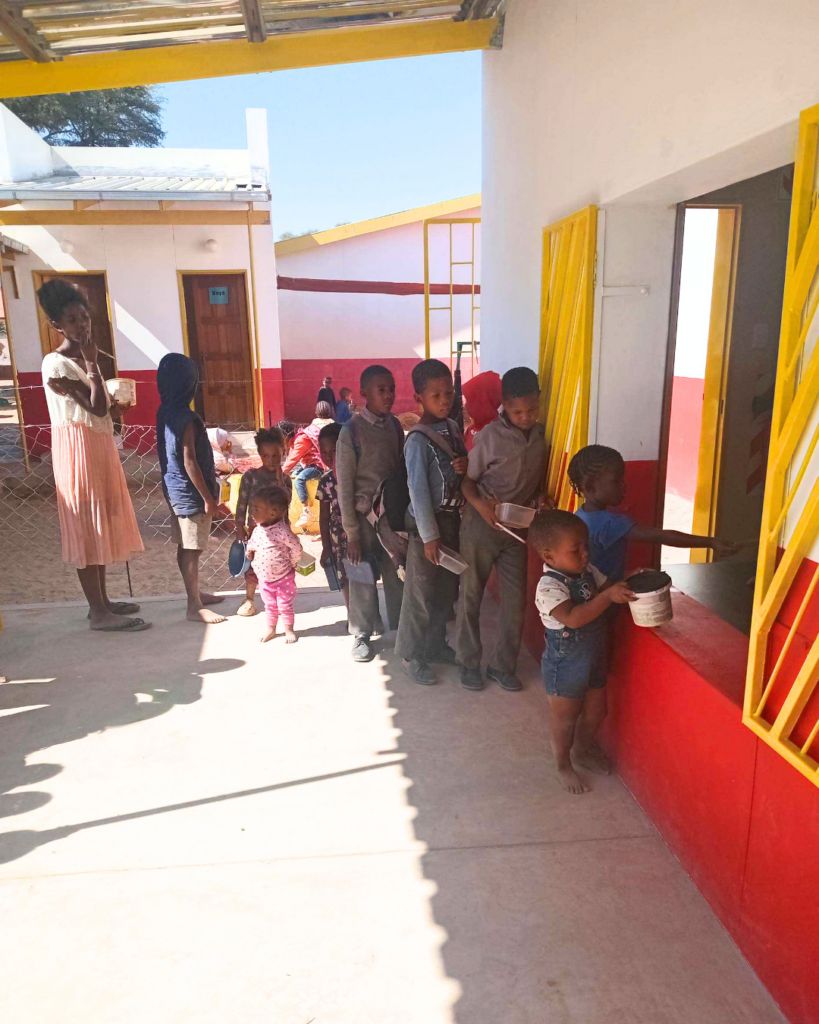
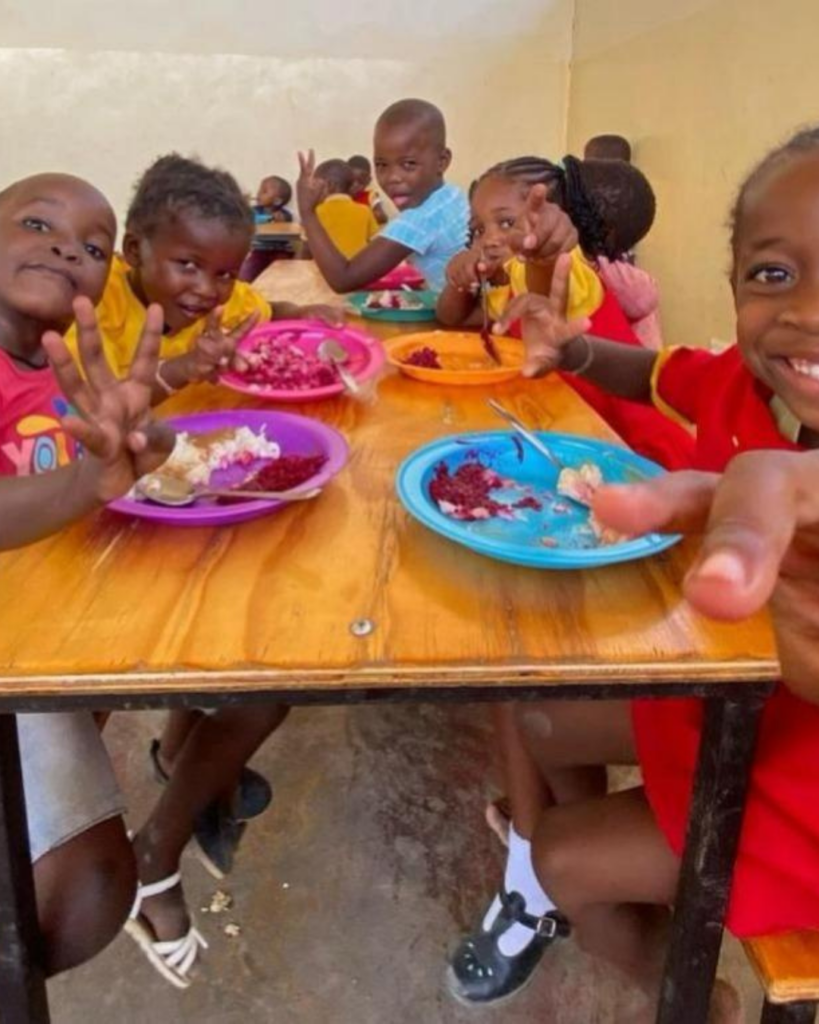
More children also took the hot lunch home. For me, this was a sign of the hardship in the families. It was a positive sign that far more children were wearing shoes and clean clothes this year. Virtually all the children also came to the project every day. The families appreciate being accepted into the project and the work done there – certainly also because of the daily hot meal and the educational opportunities.
The housing situation
However, the housing situation and environmental awareness are still very poor. Tin shack after tin shack stands next to the other, not always intact; without a front door, without a floor (just a sand floor), with a small fireplace in front of the shack. There was a lot of rain this February. As a result, children came to the project very tired. Because of leaky shack roofs and water coming up from below, they could not sleep because of the wet and cold. They sat outside around the fire with their family … and were tired the next day. A poor prerequisite for concentrated learning.


Environmental awareness
There is a municipal waste collection service and large open waste containers in the residential areas. Unfortunately, the wind often blows the rubbish out of the containers and into nature, where it remains. Or rubbish bags are simply dumped in open spaces in nature. Teachers in the project try to teach the children to throw paper and other rubbish (mostly plastic waste) into the available bins and not simply drop it. This is not an entirely easy undertaking.
Ultimately, my stay in Gobabis was once again characterised by wonderful and important impressions. I always enjoy working there.
Kind regards