Confronting the food crisis in Namibia
- with the expansion and new construction of soup kitchens
This year, Namibia has been hit particularly hard by the drought - but in previous years, too, there have been repeated crises, such as the global corona pandemic that lasted almost two years, the global rise in energy and food prices, prolonged periods of drought and irregular rainfall, which have had a significant impact on the food security, health and food supply of the Namibian population.
Due to insufficient food production as a result of water shortages and the resulting food imports, low-income households are particularly vulnerable to crises and price increases.
Some facts about the current food situation in Namibia:
- Namibia ranks 86th out of 127 countries in the 2024 Global Hunger Index: 22.2% of the population suffer from hunger and 6.2 % of children under the age of five suffer from wasting and 14.5 % from stunted growth
- According to the current analysis of the Integrated Food Security Phase Classification (IPC), around 1.4 million Namibians are affected by acute food insecurity, which accounts for almost half of the population.
- Compared to the previous year, this figure has doubled and affects not only densely populated cities such as Windhoek, but all 14 regions of the country.
- Grain production fell by 53 %, while the water levels in the reservoirs fell by 70 %.
*Source: World Food Programme, Country brief Namibia; Global Hunger Index
What we do to strengthen the food security of the communities at our locations
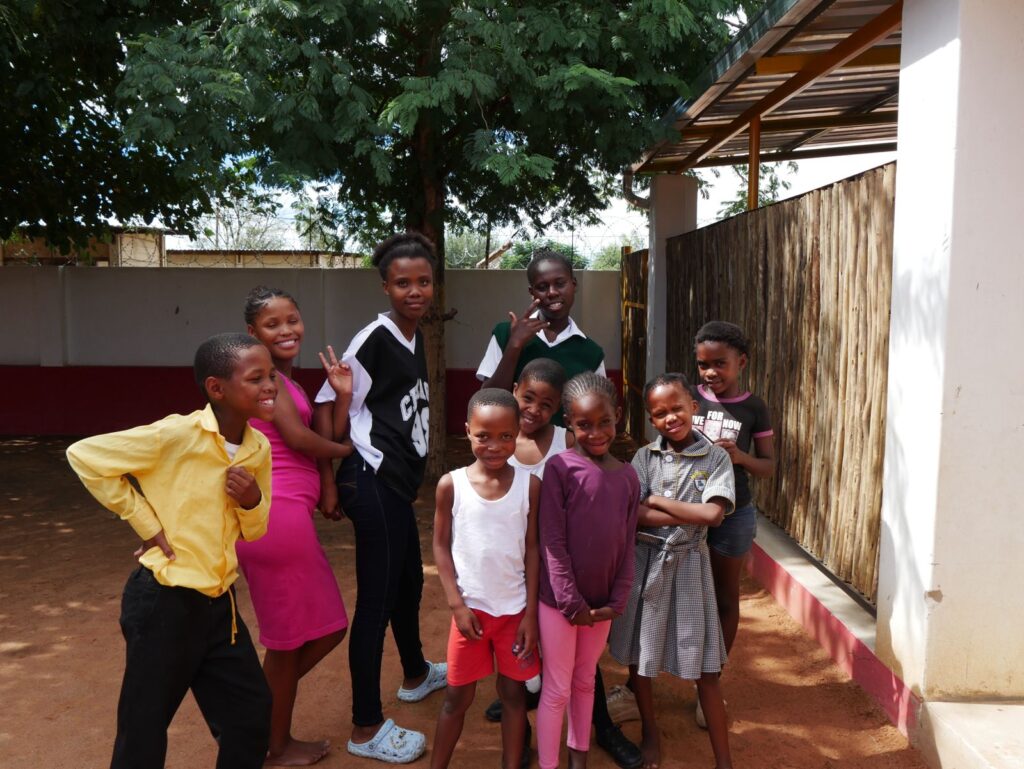
Over 2,000 children and young people are regularly provided with hot meals at all locations - in 2024 343,772 Meals will be issued.


Expand existing soup kitchens and set up new soup kitchens
To combat hunger, we are continuing to expand our soup kitchens for external children. Another soup kitchen is being built at our Otto Xamseb centre in Rehoboth. Construction is expected to start in the first quarter of 2025, and up to 250 children from the surrounding poor neighbourhoods who do not attend our facility will be able to be fed here as well. A new steps soup kitchen will also be built in Gobabis.
At locations where our soup kitchens are located, we will in future focus primarily on alleviating malnutrition, stunted growth and children and young people affected by HIV infection.


Healthy vegetables from organic farming in Ongombombonde
Our steps children in Ongombombonde and Okakarara are supplied with healthy fruit and vegetables from our organic farm. We are working towards organic certification for 2025. In this way, steps is setting a good example. The aim is to sell future surpluses more effectively and generate higher income.
Holistic nutrition offensive
For 2025, we would like to launch a holistic nutrition campaign to provide more children and young people with food and also to improve nutrition. qualitative to improve. To achieve this, the existing dietary patterns that have characterised poverty and food imports of cheap, highly processed food would have to be changed in the long term.

Bake your own bread
In order to be able to offer healthy bread with nutritious ingredients, we are planning to bake our own bread in future. This will allow us to control the ingredients and serve home-baked bread at mealtimes with a clear conscience.

Dental health
An important aspect of dental health is a varied and wholesome diet with plenty of fruit, vegetables and wholemeal products. This is important for general health as well as for dental and oral health. It is particularly important to eat fresh and unprocessed foods, as they contain valuable vitamins and minerals that strengthen tooth enamel.
This is where we will start - and also introduce steps children and young people as well as employees to dental health through regular dental check-ups by visiting a dentist who has already worked for „Dentists without Borders“.
Training courses
In order to enable a sustainable anchoring of healthy nutrition in society and thus improve living conditions overall, training courses are offered in our own training centre in Ongombombonde, which is still in the planning stage, to provide cooks, parents, neighbours and interested parties with knowledge about the connection between nutrition and health and at the same time show them how they can expand their diet in a cost-effective and healthy way by growing their own food even in the smallest of spaces.
DONATE NOW
Support our soup kitchens now and help us,
pave the way to more stable food security!