Historic drought in Namibia - 1.4 million people in Namibia affected by acute food insecurity
Namibia is being hit by a historic drought this year. As one of the driest countries in sub-Saharan Africa, people struggle every year to secure sufficient water and food. Historic because not only densely populated cities such as Windhoek are particularly affected, but water reserves in rural areas are also barely sufficient. Because there has been considerably less rainfall, maize, which is produced exclusively with rainwater, could not be harvested, and pastureland also offers significantly less biomass during a drought as a food source for animals. A serious problem, because these conditions lead to food insecurity and economic difficulties for farmers.
The crisis is affecting all 14 regions of the country, with grain production down by 53 % compared to the previous year and water levels in dams down by 70 %. As a result, vital farmland has already dried up and livestock can no longer find water, causing them to die.
According to the latest analyses by the Integrated Food Security Phase Classification (IPC), approximately 1.4 million people, or nearly half of the population, are affected by acute food insecurity. This figure has almost doubled since last year.


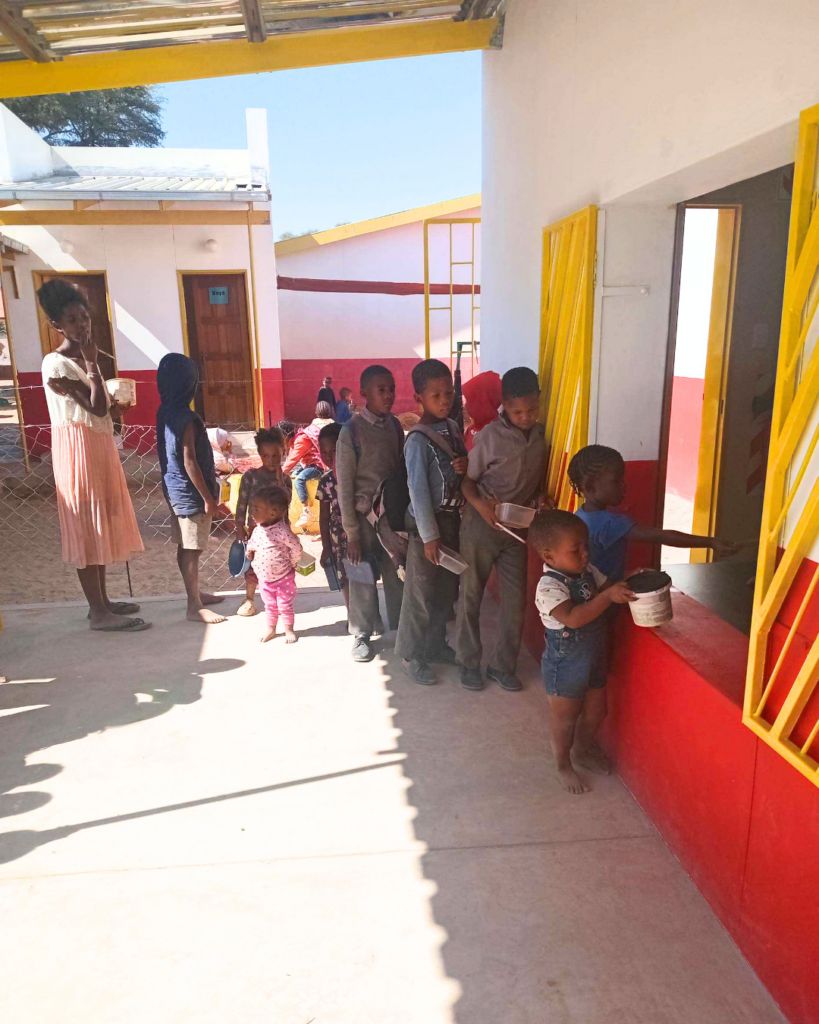
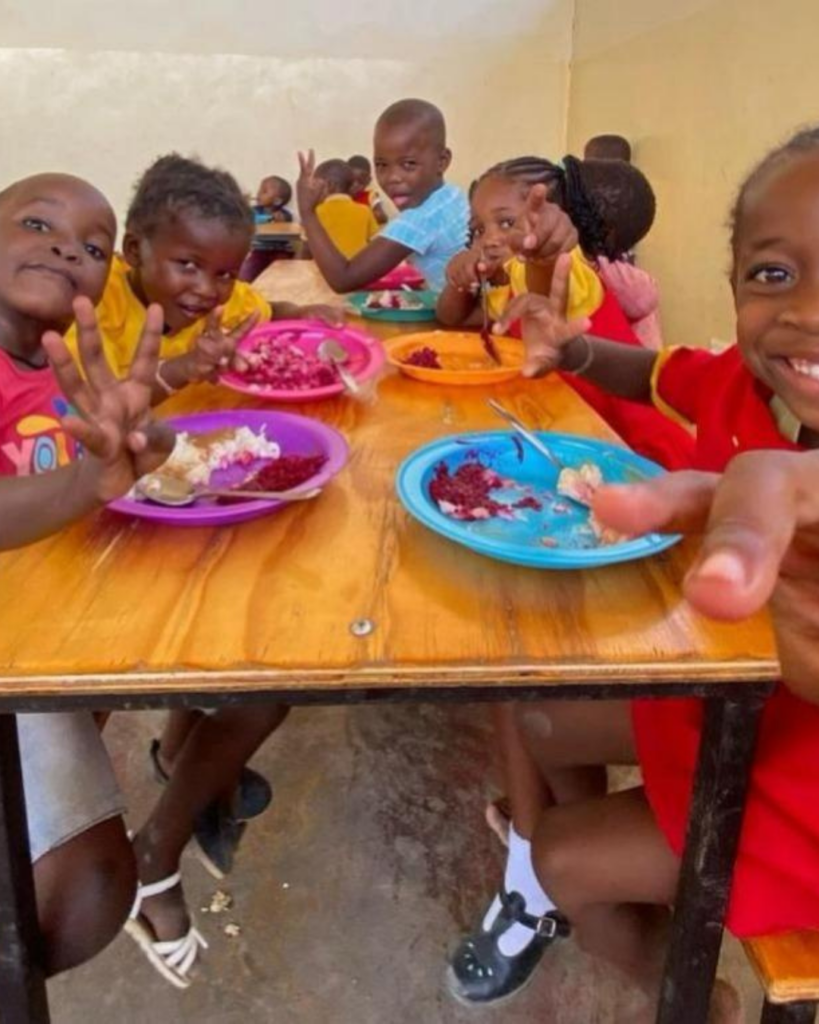
Through our soup kitchens, we are trying to prevent impending malnutrition and regularly provide our steps children and, at two locations, children from outside with hot meals to ensure a healthy diet.