[:en]
Viktoria Geng and David Drabe have actively supported us this year with their expertise! They spent six weeks in our project in Gobabis. They told us about their impressions in the following interview.
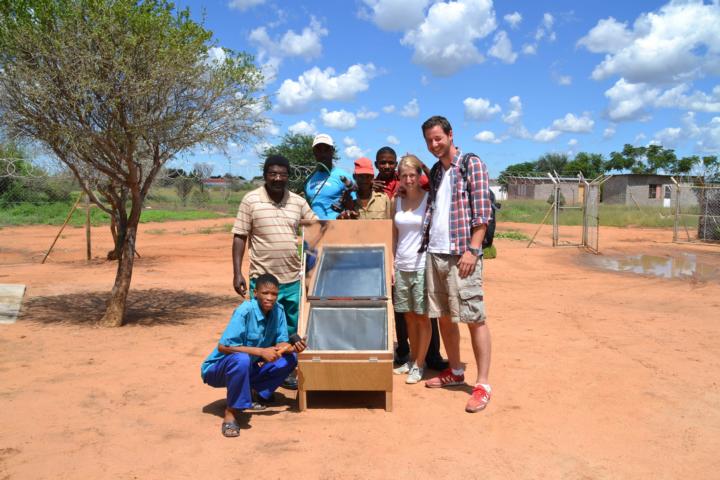
Viktoria and David,
How did you come up with the idea of volunteering in Namibia and going to steps? What motivated you to take a break from your job and work on an aid project?
Above all, we wanted to have a completely new experience, get out of the daily grind and do something good. As you can read a lot about Africa and the difficult situation there, we wanted to see for ourselves what it's like there and how we could help directly. We were very sure that this would bring us a lot personally, so there was no question of taking a break from our jobs and travelling to Namibia for 6 weeks.
With our business background, we also wanted to utilise our skills in a targeted way and looked for an opportunity where we could talk about the tasks together. Steps was by far the most professional and, with the implementation of the income-generating Steps projects, the perfect opportunity for us to utilise our skills.
You spent 6 weeks at steps for children - Light for the Children in Gobabis. What exactly were your tasks there?
We had four main areas in which we worked: the carpentry workshop, the computer centre, looking after the school children in the afternoon and volunteer management. Our daily schedule included various tasks, from drawing up business plans for the carpentry workshop and computer centre, supporting solar oven production, developing marketing and sales concepts, tutoring the young people in maths and English and developing the volunteer processes together with those responsible here on site. This is another thing that made our stay so special: no two days were the same and there was always plenty to do. Of course, there was always enough time to play and run around with the children.
What do you do professionally and how were you able to incorporate your expertise into Gobabis?
We are both management consultants and doctoral students at the TU Hamburg-Harburg. From this experience, we naturally benefited from our commercial and business knowledge in Namibia. The income-generating steps also have to be very well planned in order to be successful and really generate income. Who is the target group, how can the products be sold where and at what price are they profitable? We also have experience in analysing organisational processes and structures and making suggestions for improvement. We have had very positive experiences with how openly our suggestions were accepted and implemented.
What special experiences did you have - with your European perspective on a completely different reality of life and culture?
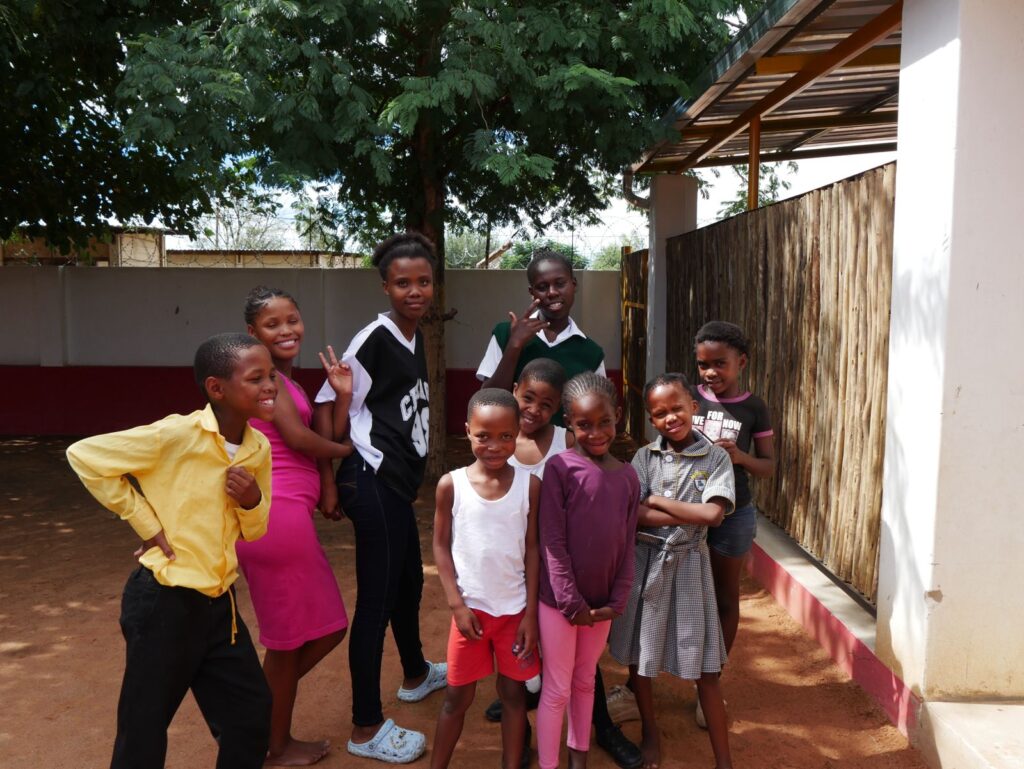
We were particularly impressed by the openness, warmth and gratitude of the children. On the very first day, when we wanted to make ourselves useful in the playground with small repair jobs, pre-school children came up to us and inspected us with great curiosity. A few moments later, we were all running around and playing games. It was very impressive for us to see how you can make children happy with just a little attention. We probably wouldn't have been able to experience this enthusiasm and openness to the same extent in Germany.
What also impressed us was the patience and composure of many people in Namibia. Letting things happen and not wanting to control everything is certainly something we want to take with us into our everyday lives in Germany.
However, we have also had negative experiences with some civil servants and people in the public sector. A certain indifference and impertinence can be felt here and there and sometimes makes volunteer work extremely difficult.
You organised a cinema evening as a small highlight of the project. That was certainly a very special experience for the children. How did you come up with this idea? And how did the children react?
We quickly realised that moving images are something very special for the children. Unlike in Germany, the little ones never actually have the opportunity to watch a film. As we both really like the film „The Lion King“ and there is also a connection to Africa, we quickly realised that we would like to show this film at school. Even though it was difficult for the little ones to follow the English text for such a long time, we still saw lots of smiling faces. To round off the „cinema experience“ and make it last 90 minutes, we made a small packet of biscuits and a lollipop for each child, which of course went down particularly well.
The core of the projects are the children and their path to a good, long-term education. What would be your spontaneous answer to the question: What potential do the children have? And how?
For us, one of the greatest potentials lies in the fact that the children are open and unbiased towards new things. We have often encountered a natural curiosity and desire to learn something new when dealing with children. Encouraging this natural thirst for knowledge through a good and sustainable education is therefore one of the most important topics of all.
How did you encounter Namibian employees and how did you try to build bridges?
We were pleasantly surprised on the very first day when we were greeted with the words „here you are at last“. The project staff are very open to suggestions for improvement and are happy to receive help from Germany. Even if the speed at which we sometimes wanted to implement things quickly took some getting used to for some. But if you make sure that you develop things together, ensure that you are working towards the same goal and don't simply „impose“ something on the Namibian employees, both cultures can complement and enrich each other very well.
If you had to describe the project in Gobabis in three words, what would they be?
Necessity, opportunity, change
You've been back from your trip for a few weeks now: even if everyday life in Europe quickly takes hold again - what do you take home with you? And what has changed?
In any case, an extremely heightened awareness of all the things we have in Germany. But also the duty each of us has to help. Whether it's through a stay in Namibia or through small things in everyday life. We must all work to ensure that no more children have to go without food, a roof over their heads or an education.
Last but not least, what advice would you give to young people in Germany?
Just do it! Such a stay and the project work were so incredibly enriching for us and also helped others. It doesn't really get any better than that. The more young people look beyond their own standard of living in their own country, the quicker society can perhaps change for the better.
We would like to thank Viktoria and David for their great efforts!
[:en]
This year Viktoria Geng and David Drabe have supported us actively with their know-how! They spent six weeks in our project in Gobabis. They have described their impressions to us in the following interview.
Viktoria and David,
How did you come to the idea of doing voluntary work in Namibia and going to steps? What inspired you to take a break from your careers and to work in an aid project?
We wanted above all to experience something totally new, to get away from the daily routine and to do something good. Since one reads such a lot about Africa and the difficult situation there, we wanted to see for ourselves how it looks there and how one can help. We were sure that it would bring us a lot personally and therefore we had no doubts about taking time out from work and travelling for 6 weeks to Namibia.
With our business backgrounds we wanted to use our skills and looked for an opportunity to talk about what we could do. Steps was by a long way the most professional organisation and with the implementation of income-generating steps the perfect opportunity to use our experience.
You spent 6 weeks at steps for children - Light for the Children in Gobabis. What exactly were your duties?
We had four major areas in which we worked: the carpentry shop, the computer centre, taking care of the school children in the afternoon and volunteer management. Here various tasks were on our daily schedule, from the preparation of business plans for the carpentry and computer centres, supporting the solar furnace production, development of marketing and sales concepts through private lessons to the young people in maths and English to the further development of the volunteer-processes together with the responsible people here locally. What made our stay so special was that every day was different and that there was always more than enough to do. Of course there was always plenty of time to play with the children and to romp around.
What do you do for a living and how could you utilise your expertise in Gobabis?
We are both consultants and graduates of the Technical University Hamburg-Harburg. With this experience we have of course used our commercial and business knowledge in Namibia. The income-generating steps must be well planned to be successful and to really generate an income. Who are the target audience, how can one sell the products and where and at what price are they profitable? We also have experience in analysing organisational processes and structures and making suggestions for improvement. Here we have had very positive experience in how our proposals have been openly taken on and implemented.
What special experiences did you have - with your European view of the very different reality of life and culture?
We were especially impressed with the openness, warmth and gratitude of the children. On the first day, when we wanted to make ourselves useful in the playground with small repairs, pre-school children approached us and inspected us quite curiously. A few moments later, we were running around with them and playing games together. We were especially impressed how one can make children happy with very little attention. In Germany we would not have been able to experience this enthusiasm and openness to the same degree.
What impressed us too was the patience and serenity of many people in Namibia. Letting things happen and not wanting to control everything is certainly something we want to take back to our daily lives to Germany.
However, we also had negative experiences with civil servants and public officials. A certain indifference and impertinence can be felt here and there and sometimes complicates voluntary work enormously.
You organised a small highlight in the project - a movie night. It was certainly a very special experience for the children. How did you come up with this idea? And how did the children react?
We quickly realised that moving pictures are something very special for the children. Unlike in Germany, the kids never really have the chance to see a film. Since we both like the film „The Lion King“ very much and it also relates to Africa, it was clear to us that we would like to show it in the school. Although it was difficult for the little ones to follow the English text for such a long time, we saw a lot of smiling faces. In order to make it a „cinema experience“ and to help them get through 90 minutes we made for each child a small packet of biscuits and a lollipop, which of course was particularly well received.
The core of the project was the children and their way to a good, long-term training. How would you spontaneously answer the question: What potential do the children have? And through what?
One of the biggest potentials lies in the fact that children are open and without bias for new things. We often encountered a natural curiosity and desire to learn something new while dealing with the children. The promotion of this natural thirst for knowledge through a good and sustainable education is therefore one of the most important issues of all.
How were you received by the Namibian employees and how did you try to bridge the gap?
We were positively surprised on the first day when we were greeted with the words „here you are at last.“ The staff in the project are very open to suggestions and are very pleased to get help from Germany. This was although the speed at which we wanted to put things in place took some getting used to for some of them. But when one makes sure that one develops things together, makes sure that you are working for the same goal and things are not just imposed on the Namibian staff, the two cultures can complement and enrich each other very well.
If you had to describe the project in Gobabis in three words, what would they be?
Need. Opportunity. Change
You are now back for a few weeks after your journey: Even though the European everyday life soon steps in, what have you brought home with you?
Definitely a very high awareness of what one has in Germany. But also what obligation each of us has to help. Whether through a visit to Namibia or through small things in daily life. We must all work to achieve the goal that no children go without food, a roof over their heads or education.
Last but not least - what advice would you give young people in Germany?
Just do it! Such a stay and the project work were so incredibly rewarding for us and have also helped others. It doesn't get better than that. The more young people see the bigger picture beyond their own living standards in their own country, the faster they can perhaps change society for the good.
We would like to thank Victoria and David for their great work!
[:]