[:en]
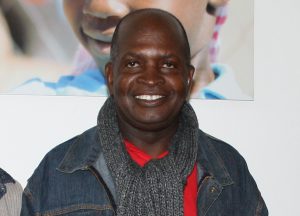 Heroes Day is celebrated annually on 26 August and commemorates the Namibian War of Independence, which began on 26 August 1966. For steps for children, Ueriuka Festus Tjikuua is a hero, as he is an important partner for the local work in his role as Chairperson of the Trust steps for children in Namibia.
Festus Tjikuua was born in Okakarara (district), studied engineering in Hamburg and works in a senior position in the IT department of a ministry in Namibia.
As nephew of the Traditional Chief Tjikuua in Okakarara and official representative of Chief Kambazembi from Okakarara, he is an important Herero personality.
Due to his extensive connections and knowledge of the needs and conditions on the ground, he was also an important contact when steps for children was founded in 2006 and has been part of the team in Namibia ever since.
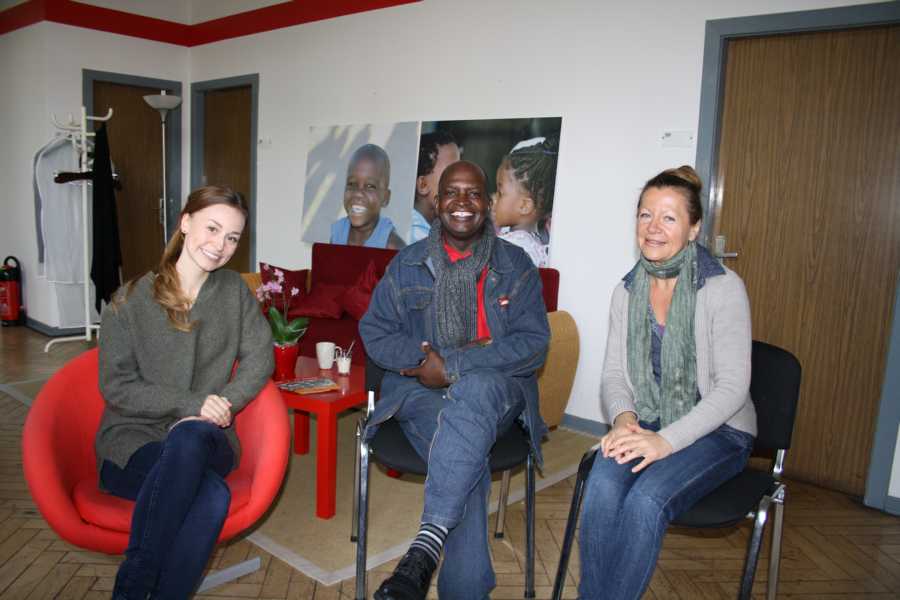
On the occasion of Heroes Day, Kerstin Jueterbock (KJ) conducted an interview with Ueriuka Festus Tjikuua (UFT), in which he told her more about his work as a trustee and his collaboration with steps for children.
KJ: How did the collaboration with steps for children begin?
UFT: The memorial ceremony on 11 August 2004 marking the 100th anniversary of the Battle of Ohamakari, at which the then Federal Minister for Economic Cooperation and Development, Heidemarie Wieczorek-Zeul, apologized on behalf of the German government for the genocide of the Herero and Nama by the imperial troops under the supreme command of General Lothar von Trotha, as well as the views expressed there by German and Namibian participants, strengthened not only my awareness but also that of many others of the need to demand compensation for the effects of the genocide, which had brought great suffering upon us as descendants of the victims. In our eyes, this was another opportunity for belated justice and reconciliation with the Germans.
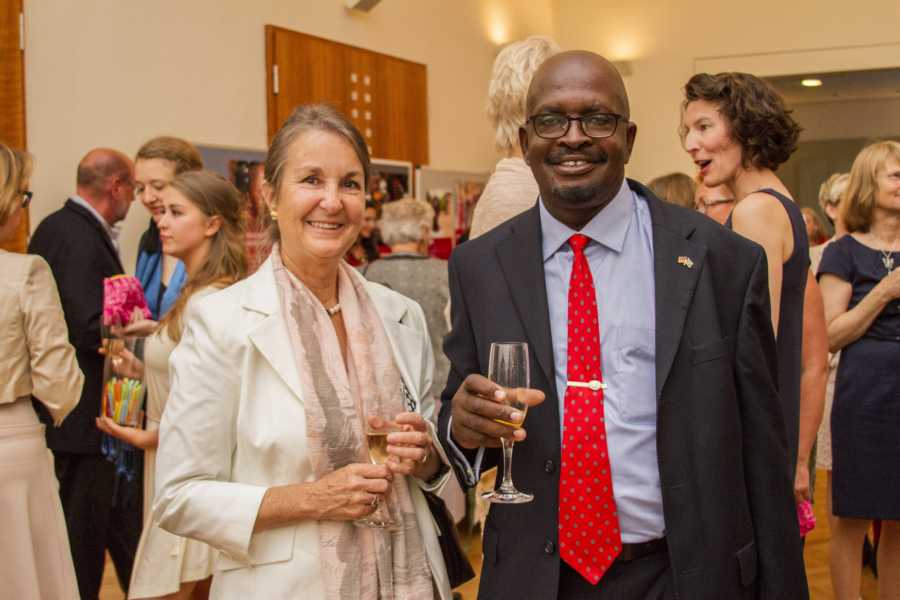
In this context, the contact we were able to establish as members of the National Preparatory Committee for the Commemoration 1904 (NPCC04) with a German group from Hanover was very helpful. The group was led by Klaus Windolph and Michael Hoppe, whom Erika von Wiethersheim introduced to me.
The seriousness with which Michael Hoppe presented the idea of establishing a non-governmental organization to support the community of Okakarara, from which steps for children later developed, marked the beginning of my collaboration.
And I helped to establish links with our government, the local authorities and the community of Okakarara in order to obtain support for this new initiative.
KJ: What is your motivation for your involvement with steps for children?
UFT: The aim of steps—to help children in need on a voluntary basis and with the goal of enabling them to generate their own income—was one of the reasons I became involved with steps, as I would like to share my knowledge and experience with rural communities without seeking remuneration.
Another motivation was the individual contributions and funding of various steps provided by Michael Hoppe, as well as by Mrs Gertrud Schmotz and her late husband Jürgen Schmotz from the German NGO Freundeskreis Namibiahilfe (Augsburg). Mr Schmotz was also a member of the first Board of Trustees of steps for children.
Despite the loss of her husband, Mrs Schmotz continues to support steps, as well as other projects, such as the House of Prayers and the planned preschool project in the village of Ombujomumbonde in the Okakarara district.
All these activities have motivated me to continue supporting not only steps but also Mrs Schmotz.
KJ: What are you responsible for at steps?
UFT: First and foremost, as a founding member of steps, I am responsible for ensuring that the ideas and goals for which steps was founded are put into practice.
Secondly, as Chairman of the Board of Trustees, I am responsible for overseeing the NGO's activities and making all services available that I can provide. My responsibilities also include ensuring good cooperation between steps for children, government institutions, the NGOs of both countries, and peaceful contacts with rural communities through the local authorities.
KJ: Looking back on the ten-year existence of steps for children and its work in Namibia, what is most important?
UFT: steps for children plays a significant role in early childhood development in Namibia, particularly for the most disadvantaged and needy children in our society.
Early childhood development is a prerequisite for all subsequent phases of education, from pre-school to university entrance qualification.
steps also supports income-generating projects and volunteer programs, which I believe will help promote reconciliation between Namibia and Germany after the long years of genocide from 1904 to 1908 and decades of colonial oppression.
KJ: What do you wish for regarding future cooperation with steps?
UFT: The experience I have gained through my involvement with steps shows that the scope of the development programs that steps for children can offer the community is limited both in terms of content and financially. Therefore, I would like to expand the scope of step’s development programs to areas such as vocational training, electricity supply, water, housing, etc. The involvement of NGOs in Namibia's development at the level of civil society is strongly encouraged and supported in order to maintain our system of democracy and community participation. Therefore, the future work of steps for children is highly commendable.
Many thanks for the interview!
Translated from the English by Martina Sylvia Khamphasith
[:en]
The Heroes Day is celebrated annually on 26 August and is reminiscent of the Namibian War of Independence, which started on 26 August 1966th For steps for children Ueriuka Festus Tjikuua is a hero, because he is the Chairman of the Trust steps for children in Namibia is an important partner for the work on site.
Born Festus Tjikuua in Okakarara (district), studied in Hamburg Engineering and works in a management position in the IT department of a ministry in Namibia.
As nephew of Traditional Chief Tjikuua in Okakarara and official representatives of Chief Kambazembi from Okakarara, it is a significant Herero personality.
Due to his extensive connections and knowledge of the needs and realities on the ground, he was also an important partner in the creation of steps for children in 2006 and since then part of the team in Namibia.
On the occasion of the Heroes Day led Kerstin Jueterbock (KJ) an interview with Festus Ueriuka Tjikuua (UFT), in which he told her more about his work as a trustee and cooperation with steps for children.
KJ: How did the collaboration with steps for children started?
UFT: The memorial service held on 11 August 2004 to mark the 100th anniversary of the Battle of Ohamakari, at which former German Development Minister Heidemarie Wieczorek-Zeul apologized on behalf of the federal government for the genocide of the Herero and Nama by the imperial troops under the command of General Lothar von Trotha, and the views expressed there by German and Namibian participants, not only strengthened my resolve but also that of many others to demand compensation for the consequences of the genocide, which have caused great suffering for us as descendants of the victims. In our eyes, this was a fresh opportunity for belated justice and reconciliation with the Germans.
In this context, the contact that we, as members of the National Preparatory Committee for the Commemoration 1904 were able to establish with a German group from Hannover was very helpful. The group was led by Klaus Windolph and Michael Hoppe and also included Erika von Wiethersheim.
The seriousness with which Michael Hoppe took up the idea of supporting the community of Okakarara in establishing an NGO, which later resulted in the development of steps for children, marked the beginning of my cooperation.
And I helped to establish links with our government, the domestic authorities and the community of Okakarara to obtain support for this new initiative.
KJ: What is your motivation for your commitment to steps for children?
UFT: The goal of steps to help children in need on a voluntary basis, together with the desire to help them achieve their own income, was one of my motives for getting involved with steps, as I want to share my knowledge and experience with rural communities without having to charge fees.
Another motivation was the personal contribution and financing of various steps by Michael Hoppe and Gertrud Schmotz and her late husband Jürgen Schmotz through the German NGO Friends Namibia Help (Augsburg). Mr. Schmotz was also a member of the first Board of Trustees of steps for children.
Despite the loss of her husband, Mrs. Schmotz continues to provide support for steps as well as for other projects, such as the House of Prayers and the planned preschool project in the village of Ombujomumbonde in the Okakarara district.
All these activities have motivated me to continue not only my involvement with steps, but also to support Mrs. Schmotz.
KJ: What are you responsible for at steps?
UFT: First of all, as a founding member of steps, I am responsible for ensuring that the ideas and goals on which steps was founded are put into practice.
Secondly, as chairman of the Board of Trustees, I am responsible for monitoring the activities of the NGO and making all my possible services available. My duties also include ensuring good cooperation between steps for children, the relevant government institutions, NGOs in both countries, and maintaining peaceful contacts between local authorities and rural communities.
KJ: Looking back on the tenth anniversary of steps for children, what is most important about its work in Namibia?
UFT: steps for children plays an important role in early childhood development, especially for the most disadvantaged and vulnerable children in Namibian society.
Early childhood development is a prerequisite for all subsequent phases of education, from pre-school to university.
steps also supports income-generating projects and volunteer programs, which, in my opinion, help promote reconciliation between Namibia and Germany after the long years of genocide from 1904 to 1908 and decades of colonial oppression.
KJ: What are your wishes regarding future cooperation with steps?
UFT: The experience I have gained through my involvement with steps shows that the scope of the development programs that steps for children can provide to the community is limited both in terms of content and financially. I therefore hope that the scope of step’s development programs in areas such as vocational training, energy, water, etc. will be expanded. The involvement of NGOs in Namibia’s development at the level of civil society is strongly encouraged and supported in order to strengthen our system of democracy and community participation. Therefore, the future work of steps for children is highly recommended.
Thank you very much for the conversation.
From the English translated by Martina Sylvia Khamphasith
[:]