In conversation with the Namibian author Erika von Wietersheim

“My greatest wish is that young people in Namibia do not lose hope.”
How did you come up with this book title, what inspired you to do so?
Erika: The book ends in 1990, with Independence Day. This day was a new beginning, an early morning, the beginning of the new Namibia. Everything was reorganized—the government, the laws, the way people live together. Hence the title “Good Morning, Namibia!”
Namibia is a country very rich in culture, natural beauty and raw materials. Namibia mines and exports uranium and diamonds, as well as large quantities of copper, gold, lead and tin. Namibia’s democracy is considered stable and the country is popular with tourists. Nevertheless, inequality is great. Even before the pandemic, 40 % of the population were considered poor. Many people here in the West cannot understand that. Why is poverty in Namibia still so widespread?
Erika: Namibia’s population is growing very rapidly and there simply are not enough jobs. Especially since there is also a rapid influx into the cities. And city administrations are completely overwhelmed when it comes to providing sufficient housing and services such as land, water and electricity.
Namibia has so far also failed to achieve its stated goal of industrialization and attract enough investors—through favorable and transparent conditions and well-trained workers. Unfortunately, growing corruption also plays a role. Now many are hoping for the production of green hydrogen, which is increasingly in demand throughout the world. Unfortunately, the coronavirus pandemic has contributed to greater poverty. Many people have lost their jobs. And at present, the rising cost of living is also playing a major role. Rising inflation, including in Namibia, unfortunately always affects the poorest members of the population most severely.
What is the state doing to reduce poverty?
Erika: Namibia does more than one might think:
- Namibia is one of the few countries in Africa that pays a state pension to all residents over 60 years of age (about 80 euros per month)
- Likewise to war veterans, disabled people and vulnerable children such as orphans
- In 2015, even a ministry for poverty reduction was set up, which, while it did not change much structurally, helped more than 10,000 urban households with food banks over a long period.
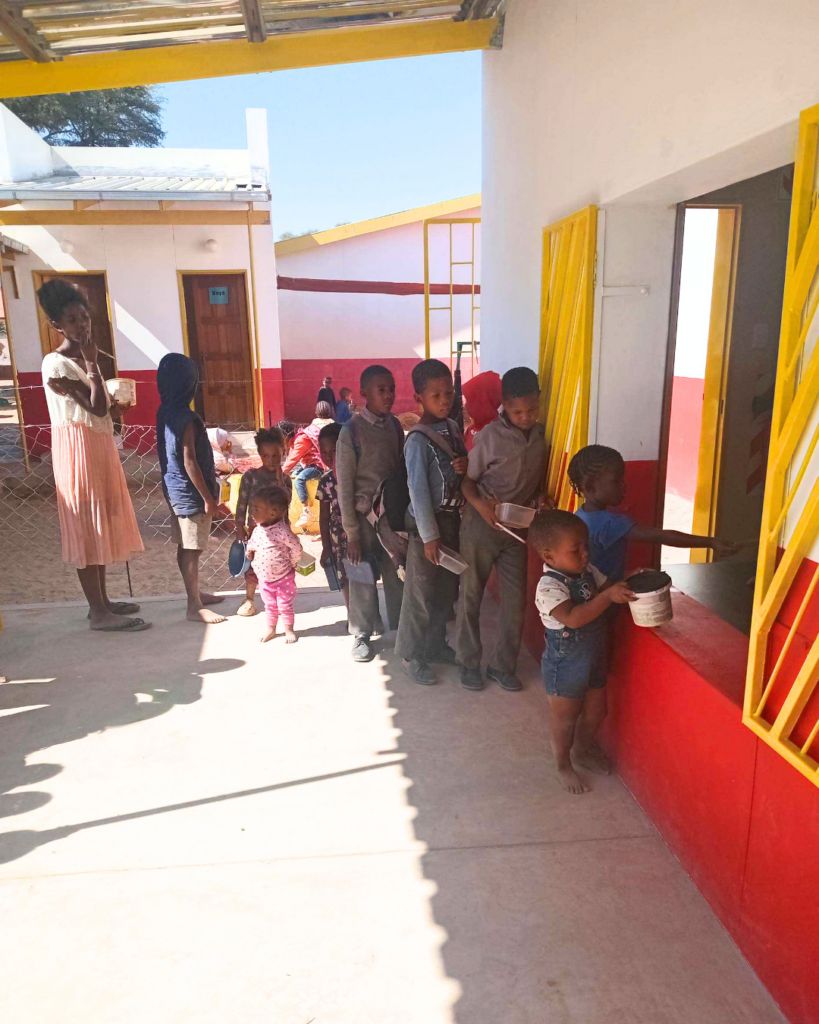
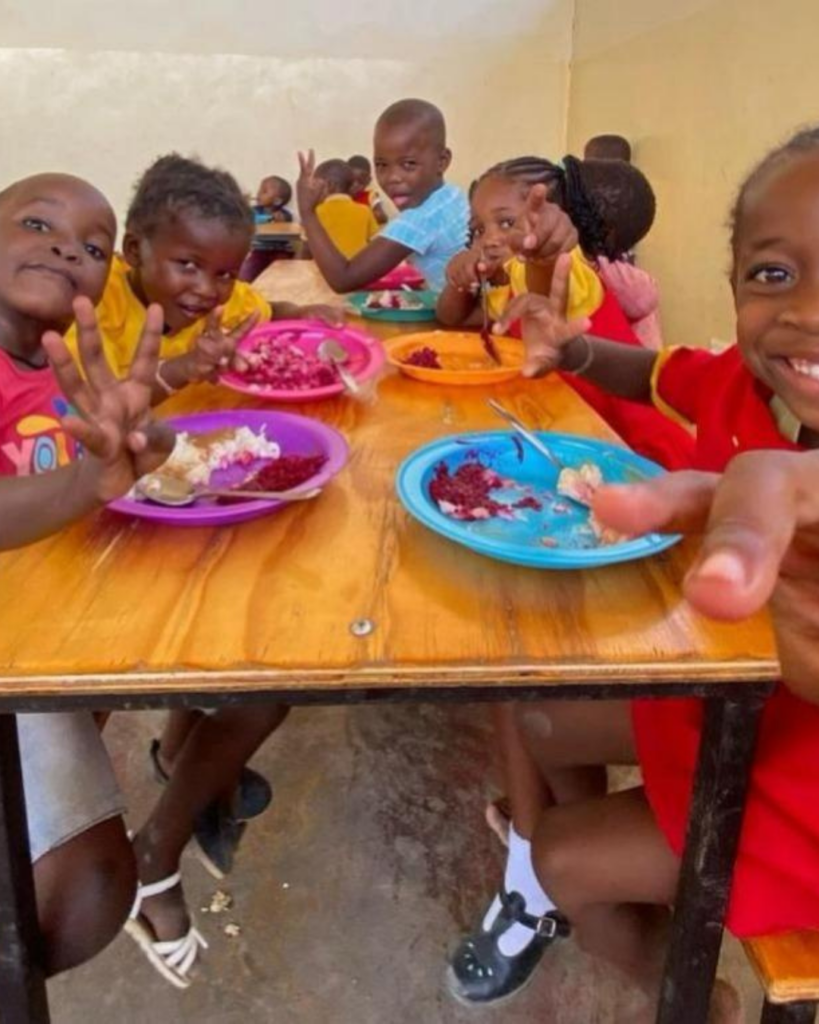
- Namibia has also had a National School Feeding Programme in all regions since 1990; 370,000 pupils receive a hot meal every day during term time.
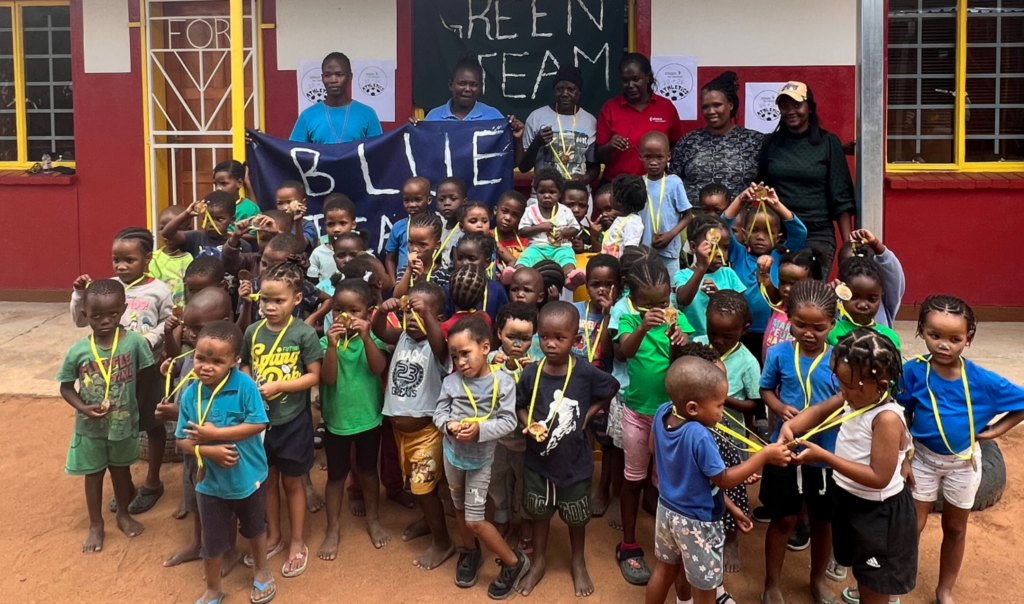
Important projects such as Steps for Children are also part of poverty reduction. As are the many smaller initiatives run privately within Namibia.
What is the situation with education in Namibia? Is the state doing enough in this regard? How important is education for Namibia’s future? And what else should the country do in education?
Erika: There is good news and bad news: Namibia spends a lot of money on the education sector and 98 % of all children attend primary school. Girls are not disadvantaged; on the contrary, there are even more women than men at universities. On the other hand: The education itself is poor, the teachers are not well trained, the schools are poorly equipped, and there are not enough classrooms. Nearly half of all schoolchildren cannot read, do arithmetic, and write properly after fifth grade. In addition, there is the high number of schoolgirls who become pregnant, which in turn is connected to poverty. The high expenditure on education therefore seems to be bearing no fruit. Poor education also contributes to the fact that 43 % of young people remain unemployed.
What, in your opinion, are the most important steps for the country that lie ahead now? What would you wish for Namibia’s future?
Erika: The consistent fight against corruption, so that trust in the government can be restored. It is important that all Namibians, just as in 1990, once again work together for a better future. Authorities such as politicians and chiefs still have a great influence here as role models, and if they are corrupt or appear to be, this leads to society falling apart.
Secondly, I wish for: A radical renewal of the education system, above all an investment in teacher training. Teachers, both men and women, must learn that they should not merely impart memorized knowledge to children, but guide them toward thinking and reflection, creativity, self-awareness, and a sense of responsibility. But in order to achieve this, the teachers must first learn it themselves, because they went through a school system that taught them precisely none of this.
And most importantly: We must give young people in our country jobs. Because they want to work. A few days ago, more than 800 people were standing in line because a factory had advertised three jobs. 800! Unemployment also has a direct influence on crime, alcoholism, drug use, and the very high suicide rate in Namibia. More than anything, I wish that people, especially young people, do not give up hope.
I know a young man; he comes from the poorest of circumstances and works for me in the garden from time to time. I am helping him to get his driving licence so that he has better chances of finding a job. Riaan is also a poet.
Here are a few lines from one of his many poems that he shows me or sends me:
Welcome to my life
After the morning prayer
I am staring at the sunrise
I am from the darker side of the globe
Still holding on to this rope of hope
I live good days in a sad life
My face plays the friendly
But there are problems piling up
Behind that cute smile.
I came a long way together with famine
And my pen bleeds the ink
Tears run while I write this…
(After the morning prayer, I stare at the sunrise/I live on the darker side of the globe, but I hold on to the rope of hope/in a sad life, I also have good days, my face appears friendly but behind that pleasant smile, worries are piling up/ I have lived with hunger for a long time, and ink bleeds from my pen, and while I write this, my tears flow…)
My greatest wish is that young people in Namibia do not lose hope. That they do not let go of the rope of hope. But those of us who are better off must help to strengthen this rope. You in Germany are certainly doing that for many children and young people with the help of Steps for Children.
What should we, in your opinion, take home with us in our minds? What message would you like to leave us with at the end?
Erika: In Germany, people do a lot for Namibia and that is extremely important. But there are also things that people in Germany can learn from Namibia:
Not lose hope so quickly solidarity in difficult times of the pandemic and great hardship. Dealing with disasters like Corona, water shortages, drought – people help each other, they get stuck in, they save water and do not argue about washcloths. If there is not enough water, then water is saved. Most people here do not have a shower anyway and wash themselves daily with a washcloth. And are nevertheless spotlessly clean. One does not wait for the state to sort everything out, but helps oneself, one's family, one's friends, as best one can. There is less talking, accusing, waiting for help from outside or from the state.
Thank you very much, dear Erika!