We asked Julius a few questions in Okakarara to give you an insight into the project work in Namibia.
If you are also interested in doing a voluntary social year (FSJ) or spending time abroad with steps for children, you can find information HERE .
How long have you been in Okakarara?
Johanna and I have been in Okakarara since 08.01.2022, and Paula joined us on 19.01. During these first weeks, we have already seen a lot and gotten used to some things. The time when everything was still completely new already feels like a long time ago, and many experiences feel like they are in the past.
What do you like best so far?
So far, I have been very happy about the freedom we enjoy. Okakarara and all of Namibia are open for exploration in our free time, and I feel largely welcome among the people here.
What do the mornings look like?
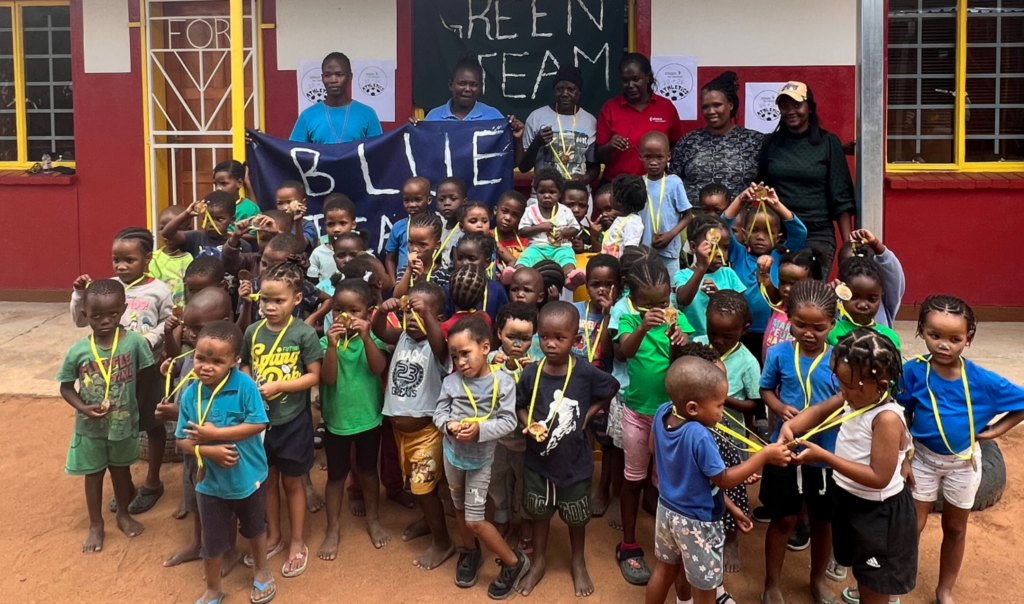
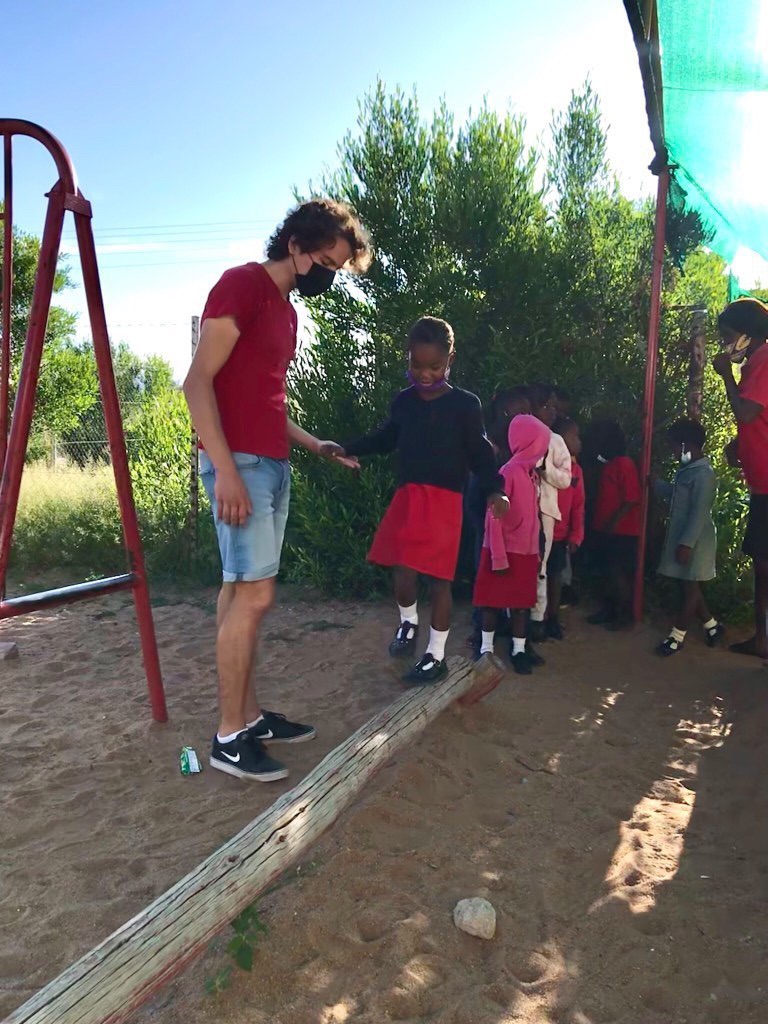
In the meantime, we have been trying to assist with our colleagues' programmes in the mornings. One kindergarten or preschool group per day does the programme items Sport, Mousebook, Numberland, or Arts. It is always helpful to have an educator with us who knows the children and can translate for them. We are always given room for ideas and the implementation of these programmes.
What do the afternoons look like?
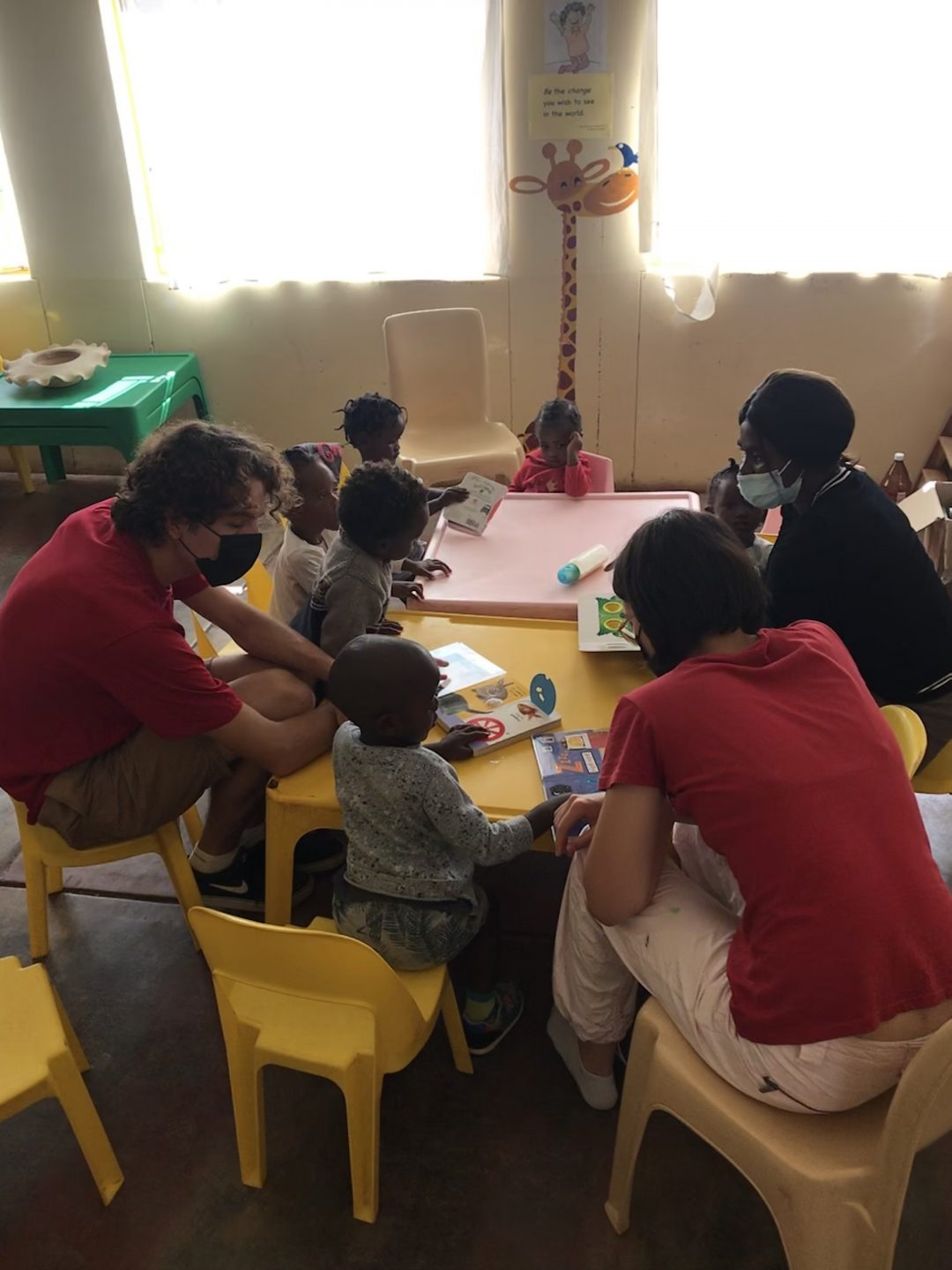
In the afternoons, we look after the schoolchildren, mainly from years 5-7, in the „After School Care“. We assist with homework, learning and playing. We still have to grow into this role step by step and find a balance between playing and learning.
What has surprised you, what did you not expect, what is nicer than expected? What challenges you most?
I was surprised that, in general, we are accepted with little prejudice. Of course, in town, as almost the only white person, you are often stared at, but are also frequently greeted in a friendly manner. I am also positively surprised that settling in in Okakarara was easier for us as Germans than expected. Even though the range on offer here in Okakarara is more limited than in Germany, there are all the things one needs. This slightly pared-down lifestyle actually appeals to me a lot right now. What, by contrast, has surprised me negatively is the children's low level of education. For example, our schoolchildren in grades 5-7 have great difficulty with basic multiplication and the English language because they lack the fundamentals. These are skills that should already be firmly established at an early age, especially since English is the official language. They find it difficult to solve tasks completely independently and correctly. I am also irritated by the broad understanding of punctuality here, especially when taking taxis.
Dear Julius, we are delighted that you have decided to do your voluntary social year with steps for children in Namibia. Through your commitment, you help children and young people from the poorest backgrounds and provide direct support on site. Thank you for your commitment!