Organic farming in Namibia
From a simple garden to organic production – the conversion to organic farming in Namibia at steps for children has begun. A place of learning and exchanging practical experiences for steps for children and the surrounding community. We are taking you into the garden in Ongombombonde.
Holistic Management International (HMI) has been working since 1984 with government agencies, NGOs and companies together with family farmers, livestock keepers, tribal members and pastoralists to support their communities so they can grow and thrive.
The certified HMI expert and freelance consultant Wiebke Volkmann first visited the steps facilities in Okakarara and the steps vegetable garden in Ongonmbondonde. in November 2021. She supported the local team (Cecilia, Philip and Gody) in introducing and further developing regenerative agricultural practices.
What is the goal of the switch to organic farming?
Strengthen the farm, produce healthier food, improve the habitats of local wildlife and protect the environment.


Experiences with the local population and local conditions
At the beginning of the conversion, a workshop introducing the principles of organic farming was held. In addition to the steps team, farmers from the surrounding area also took part in the workshop.
The garden team in Okakarara showed interest in organic production, and together further steps were planned.
This included training in multi-crop cultivation to make dryland farming (rainfed only) more sustainable and productive, in various soil preparation techniques and enrichment with kraal manure and biochar. The fields were staked out and supplied with seed and biochar (donated by GIZ).
Organic farming in Namibia – water and land adaptation
After initial setbacks caused by delayed rain and pests, the cultivation area was first reduced, concentrating the available water supply in order to improve production here and switch to organic methods, before the cultivation area can later be expanded again as experience grows.

In the field during garden cultivation – workshop
Processing and marketing – new opportunities are being explored


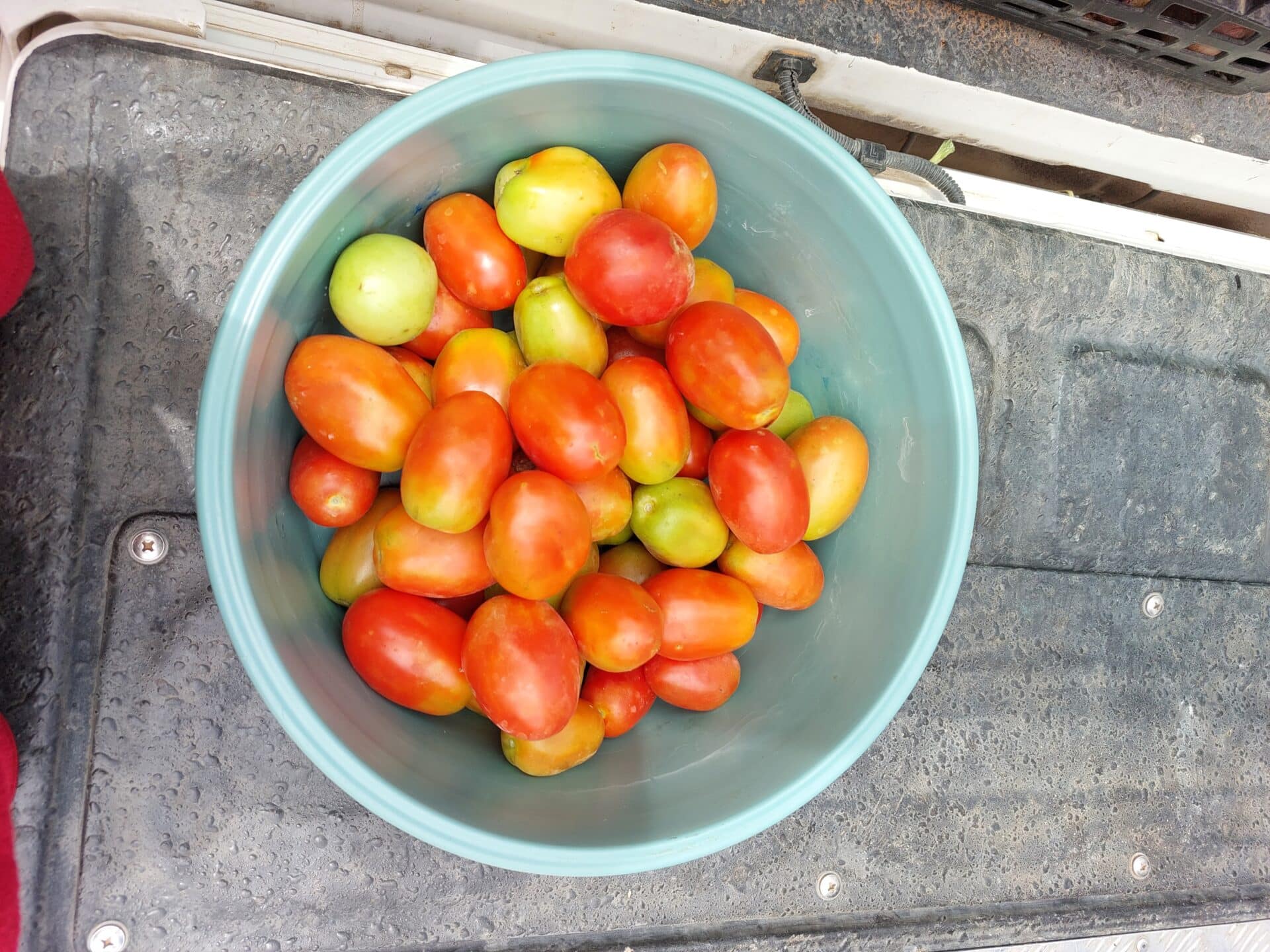
The considerable amount of ripe tomatoes could no longer all be sold fresh in December 2021, and the soup kitchen no longer needed any tomatoes during the holidays. So Wiebke showed the steps team how they can dry the tomatoes.
This first small experiment with dried production surplus is being incorporated into a holistic plan for market gardening.
This is intended to market and produce healthy, high-quality food with as little input cost as possible (including storage, cooling and transport), both for sale and for personal consumption.
Entrepreneurship


This includes holistic (tripple-bottom-line) financial planning aimed at simultaneously building up social, biological/physical and financial assets.
It is important to note that converting the production system will take time – it is difficult to say exactly how long, as there is not enough experience in Namibia with soil as sandy as that in Ongombombonde.
Soil improvement is the cornerstone and requires an initial investment from outside. For this, wood chips and manure are being used for mulching the beds and for compost production.
Local production and increased consumption of healthy vegetables

Alongside cultivation, we intend to promote the preparation and consumption of vegetables and plant-based products in Okakarara through various training sessions and fun events with children, young people, parents and farmers from the surrounding area. Omgombombonde is to serve as a place of learning and exchanging practical experiences for the surrounding community.
Donate here for >> Young Vegetables.