The chicken coop in Okahandja, Namibia
Location: outskirts of Okahandja, Namibia
Partner project: Ileni Tulikwafeni
Head: Meme Kauna


Kauna looks after the solar-powered incubator here. She has experience with chickens, as she also breeds them privately.
Income secures education
The project…
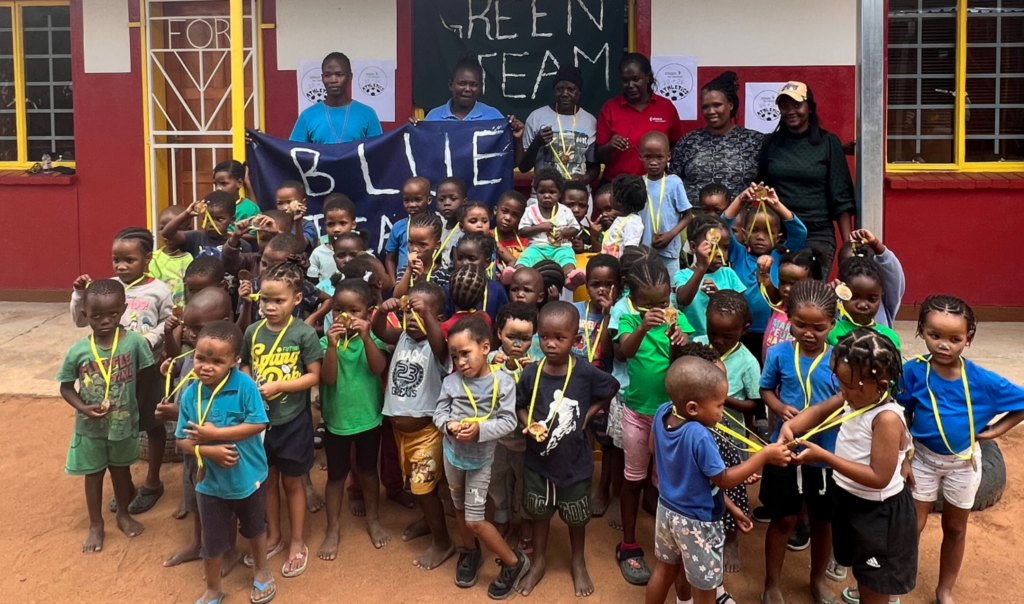
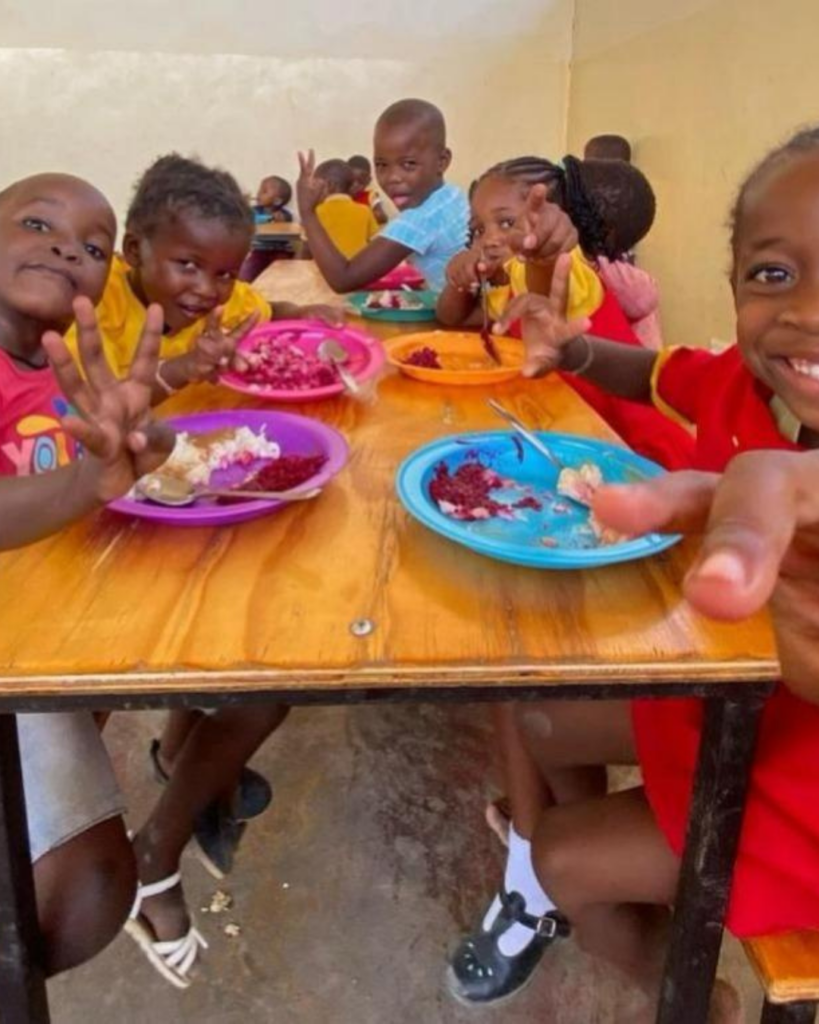
…was founded in 2006 by Kauna as a community project. The name “Ileni Tulikwafeni” means “Come all and let us work together.” The project looks after more than 300 children and young people in kindergarten, preschool and afternoon activities, and provides them with daily meals through a soup kitchen.

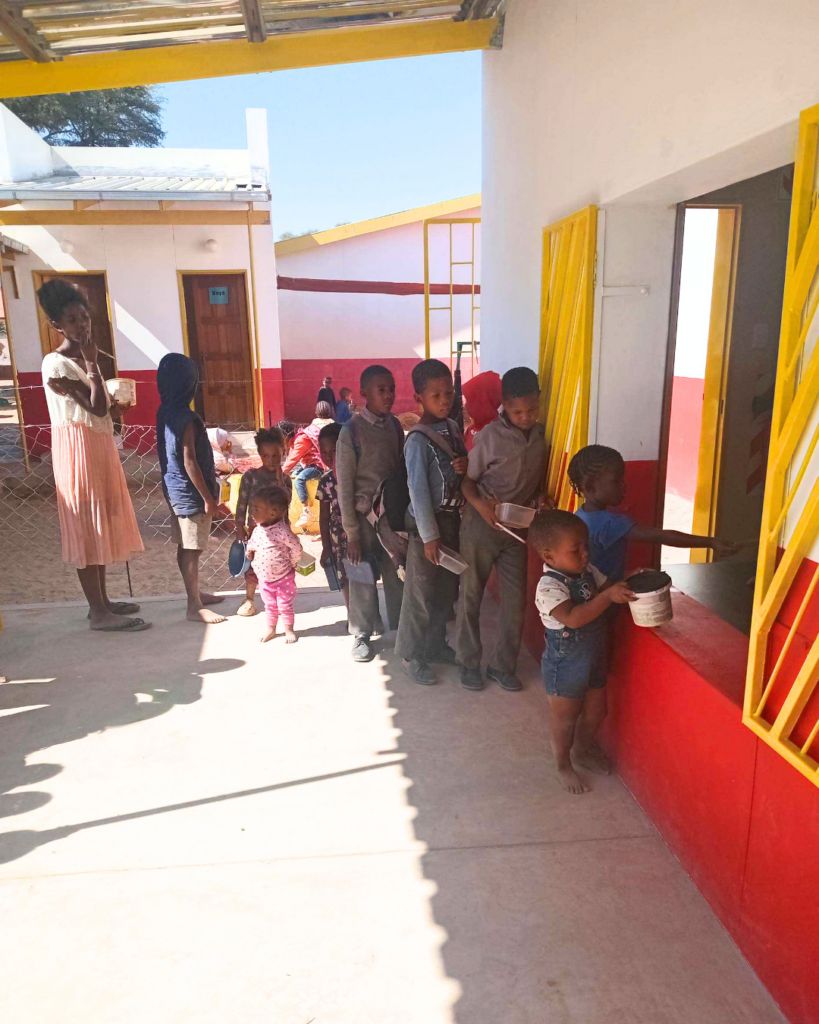
Long queues in front of the soup kitchen in Okahandja, Namibia.
Corona…
…is taking its toll on people in the community. The queues became so long over the past year that up to 1,300 children and young people received their only meal from the soup kitchen every day.
The location…
…is one of the poorest areas in Namibia. In the “Five Rand” area, an informal settlement, thousands of people live under the most undignified conditions.
steps for children…
…has been a cooperation partner since the end of 2019. Here, we are setting up a chicken farm as an income-generating measure. The chicken coop was completed as early as October 2020, and laying hens and a rooster have already moved in. The solar-powered incubator has also been commissioned and can hold more than 500 eggs.


What happens to the eggs?
Some of the eggs are sold. Others go into the solar-powered incubator, where chicks can hatch within approximately one month at suitable humidity and warmth.
What happens to the chicks?
Once the chicks have hatched, some are sold and others are raised. These chickens are then either sold or used as laying hens for the chicken coop.

The current situation:
Due to the crisis caused by Corona, not much has been sold yet. We therefore need patience until this measure actually generates a profit and can genuinely finance the project's educational activities.
Construction measures……began at the end of 2020: the construction of a new school building with 2 classrooms and separate toilets for girls and boys, financed by donors of steps for children. Afternoon classes will take place here. The plan is for the teachers’ salaries to be partially financed by sales related to the chicken coop and the incubator.