Do you know the ethnic minority San?
The San are considered the indigenous people of southern Africa. Over the millennia, their habitat was increasingly restricted by the arrival of the Bantu (“Black Africans”) and Europeans. This also resulted in the loss of their culture.
Many San can no longer speak their language today, although it is important to understand that there is no such thing as the San language, but rather 7 different language groups exist within the San community. Each group speaks such a different language that they cannot communicate with one another, even though the “clicks” sound very similar to our ears.
Today, there are still San living in Namibia…
Today, several tens of thousands of San still live in Namibia, impoverished, in poor health or without any healthcare at all, and with only rudimentary education. Their tremendous knowledge of medicinal plants is being taken to the grave with the older generation, while the younger ones are trying somehow to survive in a modernising society.

During the coronavirus crisis
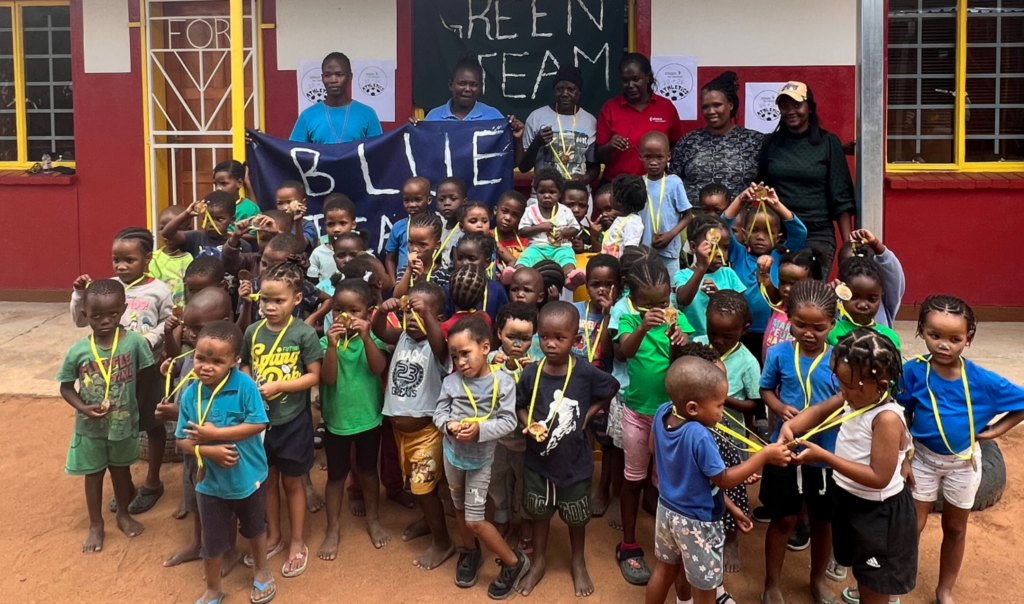
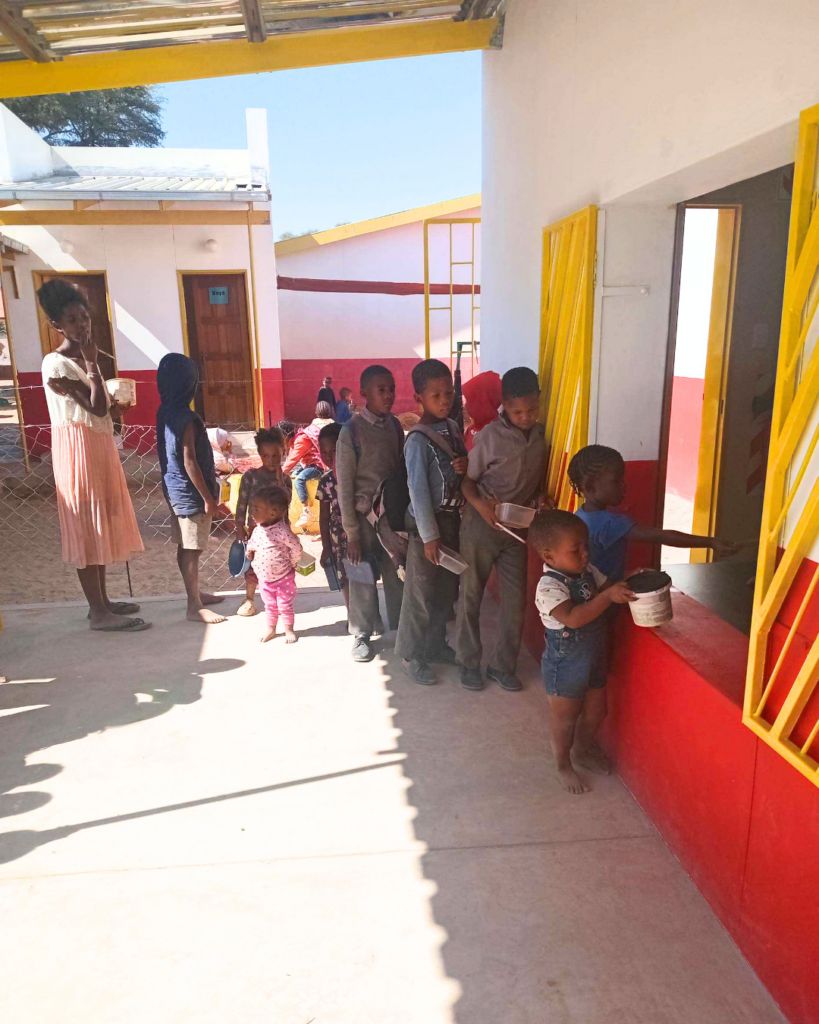
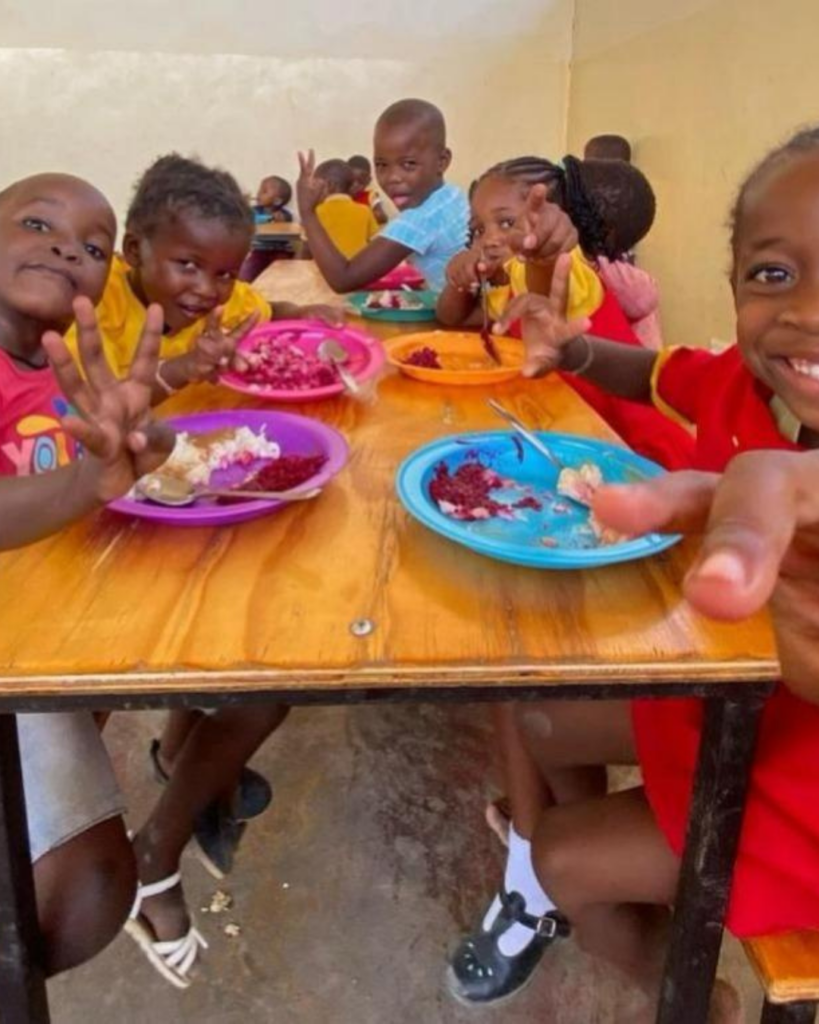
During the COVID-19 crisis, we are unfortunately observing a dramatic deterioration in the living conditions of the San. 24 children from this marginalised ethnic group come to our project in Gobabis, where they are cared for and receive educational support together with other children from other tribes. Their parents, if they are still alive, previously got by as day labourers and are now also dependent on external assistance.

No child, no person should be excluded because of a different language or culture.
There are now already some initiatives to integrate the San more strongly into ecotourism as experienced rangers. As tour guides, they pass on their knowledge. While this development is actively supported by German development aid, we want to secure the livelihoods of all those who continue to live below the subsistence level and who, foreseeably, have little chance of finding employment in the formal sector.

What can you do?
Above all, through our Guardian Angel Programme, we can provide sustainable support to the San and contribute to their inclusion.