Experienced and learnt a lot
Sophie has already seen, experienced and learned a lot in the short time she has been at steps in Okakarara . In this post, she describes her everyday life at steps and what it is like to come to Namibia and stay there for just a few months.
Hello from Okakarara!
I am Sophie, 19 years old and have been at the steps for children project in Okakarara. since 12.01.23, so for just over a month. I am a short-term volunteer for about three months. At the end of April, my fellow volunteer Lucie and I will return to Germany.
It is strange when I think about the fact that I have only been living here for four weeks. Because in this short time, I have already seen, experienced and learned a lot. This is also thanks in no small part to our fellow volunteer Pauline, who has been living here since August and is staying for a whole year. She warmly welcomed Lucie and me and gave us a great start.
As a result, I settled in very well in Okakarara and quickly got used to my surroundings. The only thing that keeps getting to me is the temperature, as it cannot be compared with the weather in Germany.
The morning
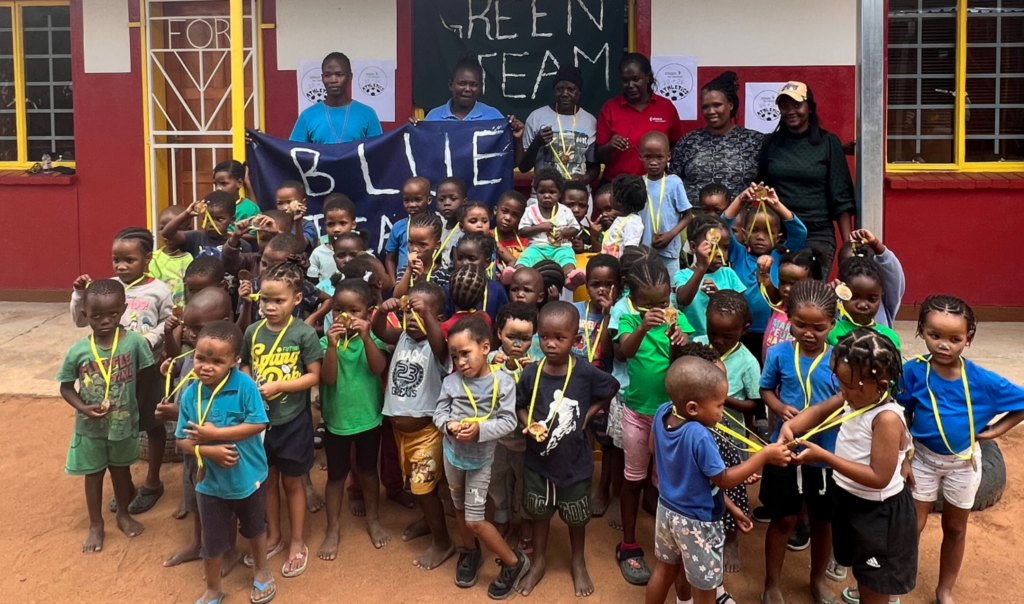
By now, I also have a routine in my working days. In general, the weekdays can always be divided into a morning and an afternoon. For us, the morning is always roughly from 8 to 12 o'clock. That means I get up around 7 o'clock in the morning, get ready for the day and have breakfast. Just before 8 o'clock, the three of us walk together to the steps grounds, which are only a good 100 metres from where we are staying. The first hour in the morning, I then visit a class (PreSchool, Kindergarten or ECD (Early Childhood Developement)) in their morning circle. After that, the children have breakfast.
From about 10 to 11 o'clock, art and Mousebook are on the agenda. On Mondays and Wednesdays, I go to a PreSchool class and help the teacher with Mousebook. In Mousebook, the children learn things like colours, up and down, or right and left through various tasks, exercises and games.
On all other days, I help Lucie at this time with art activities for the children. At the beginning of each week, we always think of something creative that we can paint or make with the children.

Of course, the result is secondary; it is usually much nicer to observe how much fun the children have with the tasks or how focused they are while working.
The last hour of the morning often varies a lot. Either I play a little outside in the yard with the children, or we are given other extra tasks during the day that can be done well at this time.
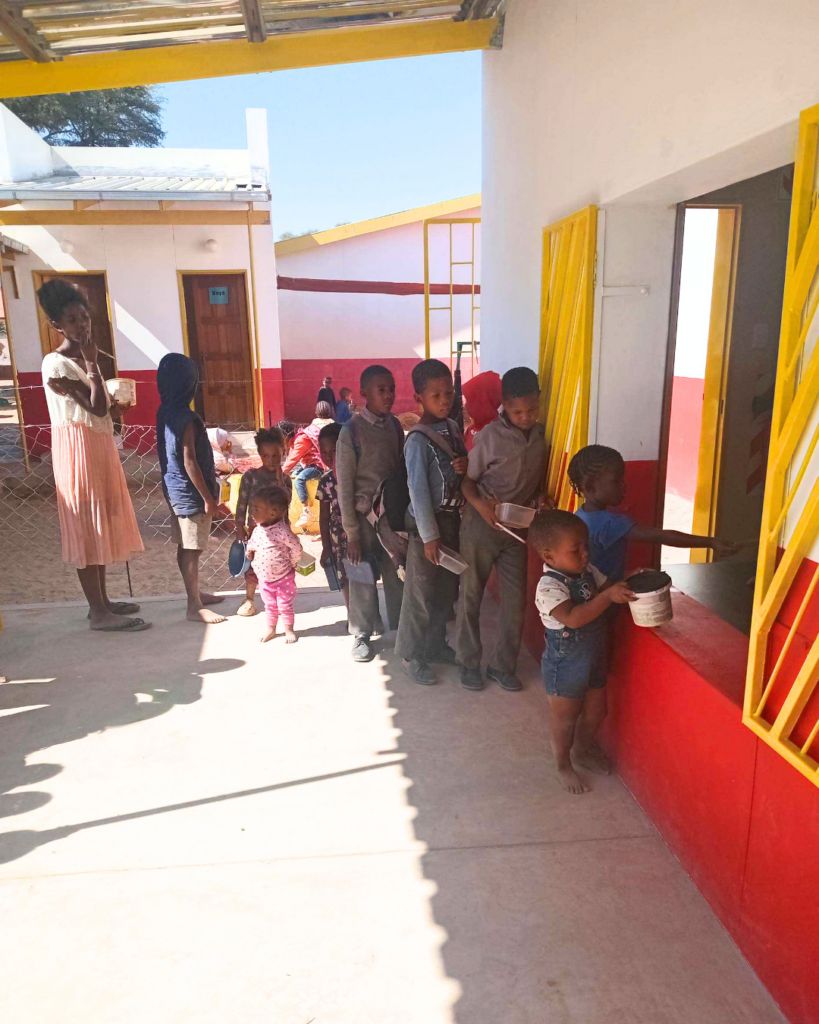
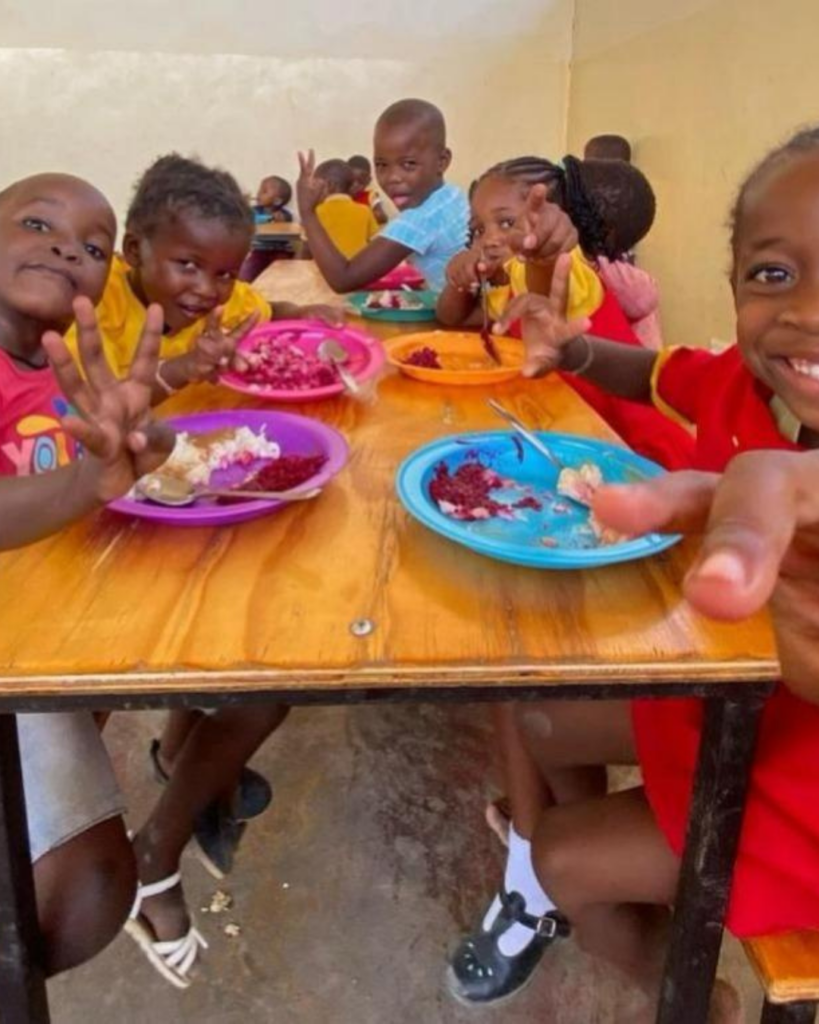
Just before 12 o'clock, all the children have lunch in the soup kitchen. On some days, we like to sit down with them and eat with them too.
Lunch break
From 12 to 14 o'clock, we then have lunch break. It is always nice to recover a little from the morning and recharge our batteries.
The afternoon
Around 14 o'clock, the afternoon lessons begin, the ASC (After School Care) for us with the fifth to seventh formers. In general, everyone there is supposed to start first with the homework they have received from school. If they have questions or do not understand it, we help them and provide them with learning materials such as books or exercise books that they need for this. For the children who either have no homework for the day at all or finish it quickly, we have our own worksheets to deepen their English or maths skills.
When everyone has finished the day’s tasks and there is still time left, they can also play together. At the end of an afternoon, we always have a „Cookie Time“. This means that all the children line up one after the other in a queue with us and have to solve a maths problem (usually from the times tables). For a correct answer, they get a cookie.

That means that for us, a successful working day comes to an end and we have the rest of the evening free. We also have the weekends free from Friday at 12 noon, so we can do our shopping, go to church on Sundays or go on an outing.
For me, it is so lovely every morning to see the children and notice how happy they are to see us. As soon as I go into a class, for example, all the children wave excitedly from their seats. Often I walk across the yard and a child suddenly comes running out of nowhere and hugs me. Usually it doesn’t take long before you are surrounded by lots of children. But what I really love most is that here you learn to appreciate the smallest things, day by day.
A warm welcome at steps
I am very surprised by how quickly you can settle into this new culture. You automatically try to adapt, and I love learning new things from the local people. The staff at this facility warmly welcomed us and make it much easier for me to fit in here.
You still gain new experiences every day, but you learn to deal with everything and slowly understand better and better how things work here. So far, I feel very comfortable and settled in Okakarara.
The language barrier – can be overcome
Beforehand, I did not necessarily expect there to be a somewhat greater language barrier at times, which makes communication with some staff, but especially with the younger children, more difficult. The little ones only learn a few words of English over time, which is why it is sometimes difficult for us to convey an instruction when there is no teacher present to translate. On the other hand, I think it is great, because this is also how I am learning some words in Otjiherero in order to communicate basic things, such as “ii” = “Yes”, “kako” = “No”, Otjiti! = “Stop that!”, “Haama!” = “Sit down!”, “Indjo” = “Come!”, Tuka = “Jump!” or “Tupuka!” = “Run!”.
Warm greetings from Okakarara to Germany!

Dear Sophie, we wish you a wonderful, enriching time at steps for children in Okakarara. We sincerely thank you for your commitment on site, which is very valuable for the children and young people!