[:en]
Nathalie Rogg (right) supported us for 12 months in Okakarara over the past year. Now she looks back on her time…

Nathalie, a year in Africa… One probably doesn’t make such a decision overnight. What motivated you to take on this major undertaking?
I had long wanted, after my Abitur, to go to an African country for an extended period of time to do volunteer work there. I wanted to take the opportunity after graduation to do something practical first, get to know a new country, and gain new experiences.
We are very glad that you found your way to steps for children, because you did a great job there. How did you come across us? What was decisive in your decision to spend the year in our projects?
I came across steps for children through my sending organization GIZ (Association for International Cooperation and Development). Here, one could view all the projects online, sorted according to specific criteria. steps convinced me above all through the variety of its areas of work. The combination of social and income-generating projects corresponded to my own ideas.
When, as a young person, you encounter a completely new culture, you receive numerous new impressions that you first have to get used to. What was the “different” thing about Africa for you personally? What particularly stood out to you during the adjustment period, or was also unfamiliar to you?
For me, the different thing in Africa is above all the mindset of the people, the culture, the weather and especially the dependence on the weather, the living conditions and the differences prevailing within them, as well as the different understanding of values. The cheerfulness of the people struck me most at the beginning. Most people there have significantly fewer material means available to them than a middle-class person in Germany, yet the majority seem much happier and more content with their lives than some here in Germany seem to be. The different understanding of time also becomes apparent very quickly. Time is relative. In Namibia, for example, the word „now“ is used more for a period of up to several hours rather than for an exact point in time. If you really mean „now“, you say at least „now now“, if not even „now now now“! It takes some time to get used to things like that. What was especially unfamiliar to me at the beginning was the way people communicate. In Germany, one is usually used to communicating directly with someone. In Namibia, I experienced this only very rarely. Indirect communication is much more common here than direct communication. It is not very easy at first to deal with something like that, because you never know for sure how best to communicate your concern to the other person. You try to understand how people think, then after a few weeks you think, yes, I’m starting to understand some things, but you are still only at the beginning. You definitely never stop learning during a year like this!
You were in Okakarara, where the work of steps for children began. How did you experience this place?
I experienced Okakarara as a place with very open and helpful people. A place where music and dance are everywhere, whether in the morning, at noon, in the evening or at night. I enjoyed the family atmosphere in Okakarara. It was my home for 12 months, where I lived under simple conditions, but ones that were completely sufficient. In my opinion, the project itself also has a good standing in Okakarara.
What exactly were your duties in the project work?
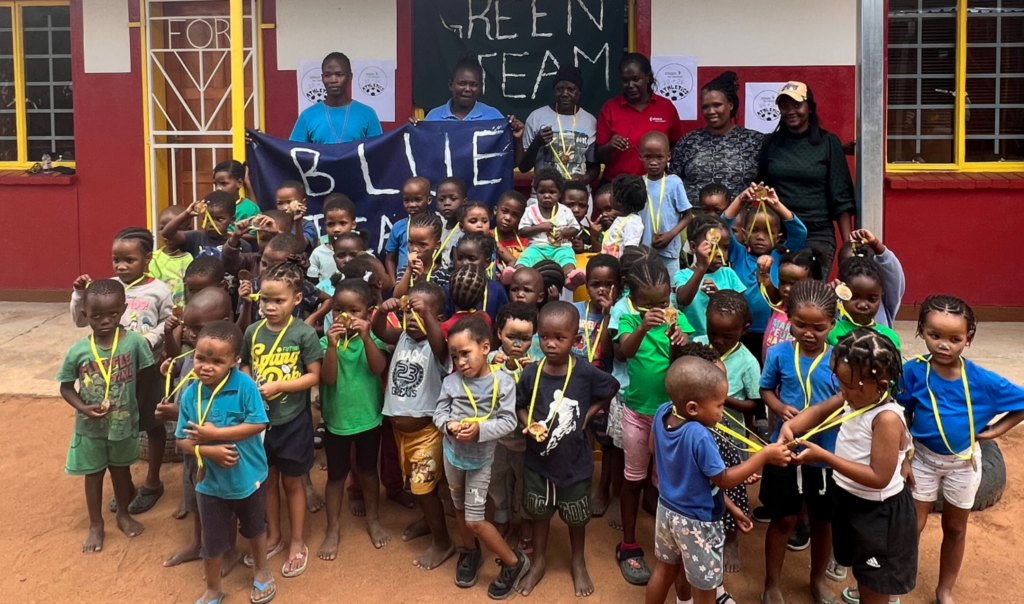
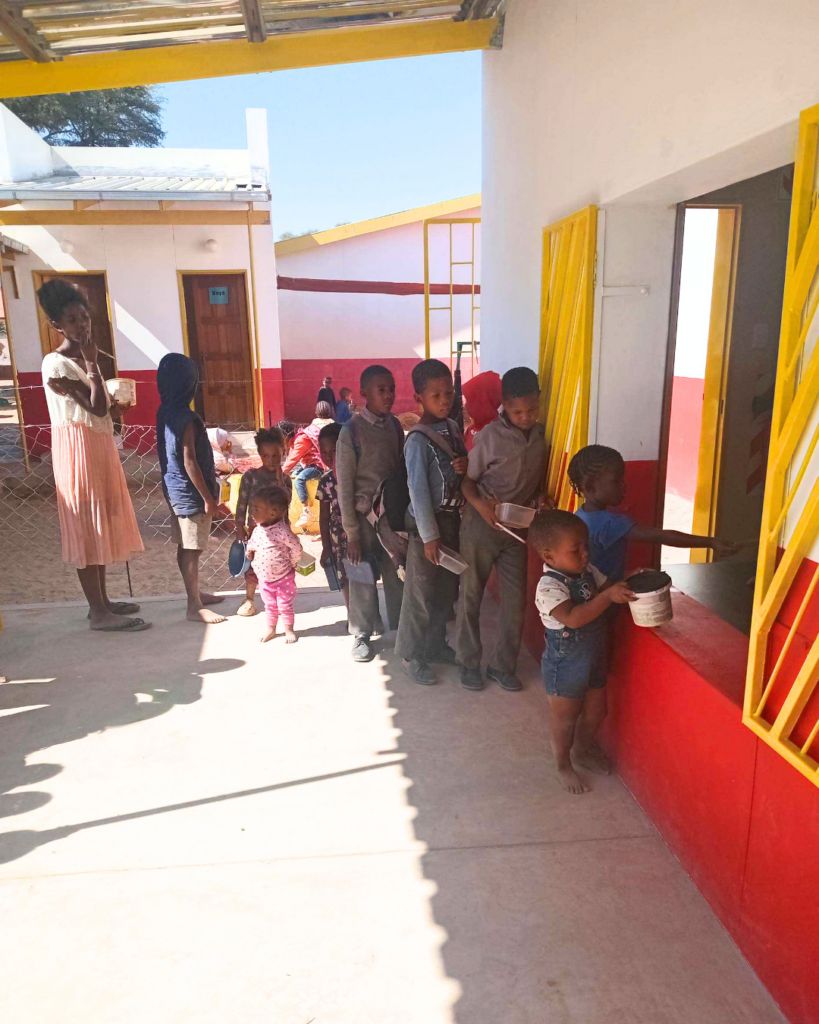
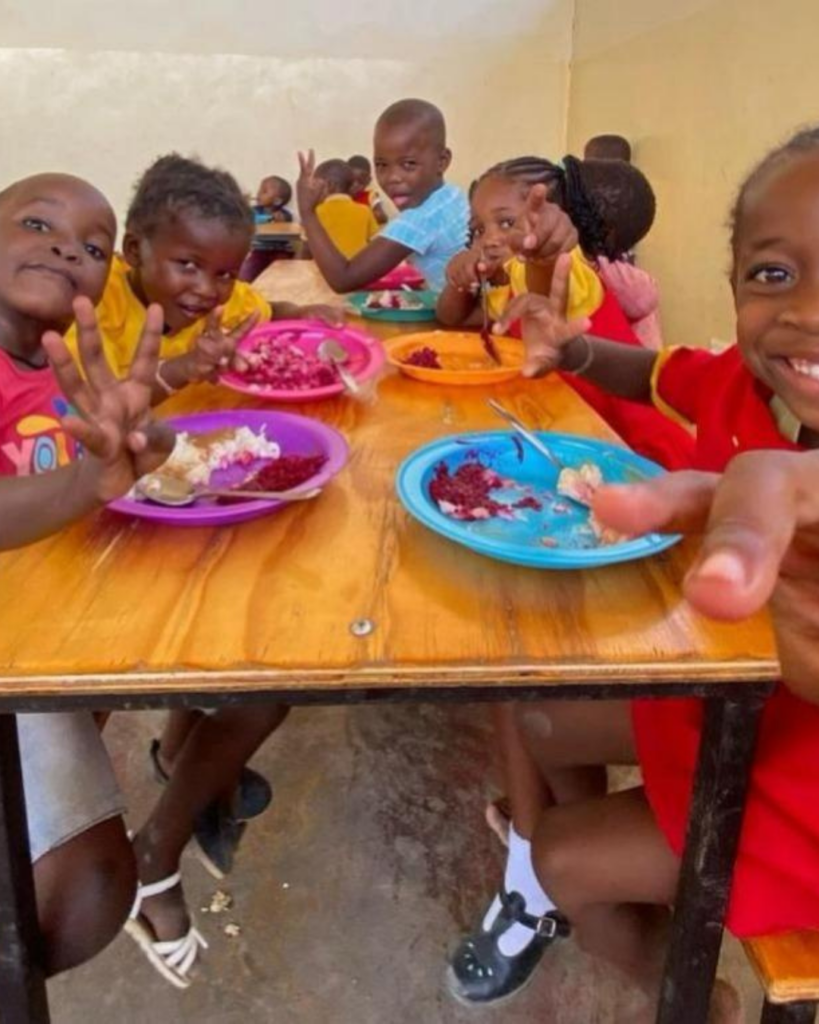
In the project I took over the organization/administration of the guesthouse and the computer school/internet café. In the vegetable garden with olive plantation, I helped every second week in the morning, and in the afternoon I was active in the after-school care program, where I mainly supported the older pupils (grades 4-6) with their homework and exam preparation. In the preschool I supported the teachers in the so-called „Numberland“ in carrying out these weekly sessions. If help was needed in the soup kitchen, I also helped there. At weekends we occasionally organized a „cinema“ that was open to the entire Okakarara „community“.
Tell us a little about your everyday life… Where did you live? What was the food like?
I lived directly in the project house, where, besides the two rooms for the volunteers, a bathroom and a kitchen, Sonja's office (project manager) and the computer room are also located. There is a lot of toast and milliepap (cornmeal porridge) to eat. Milliepap is eaten sweet in the morning and usually savory with meat at lunchtime. Otherwise, there are the usual macaroni, potatoes, rice, ... nothing special. The Herero love eating meat. It is not uncommon there to have meat at least twice a day. On the street you can buy it all day long at small roadside stalls, so-called „kapanas“.
What is the most important experience or the most significant insight that you were able to gain through your work as a volunteer?
The experience of living a whole annual cycle in another country, in a culture that was completely foreign to me at the time, with people who were strangers to me until then. You learn an astonishing amount about yourself, about your possibilities and limits. Limits are there to be broken, as the saying goes. And during my year some limits were broken and new ones were set. One of the most important insights for me is that you can be much happier with much less than one often thinks in Germany. I learned not to complain about so much all the time and not to get upset about delays of 3 minutes. What does it matter whether you arrive 5 minutes earlier or later? In Germany, in my opinion, people put themselves under an enormous amount of unnecessary stress, which I did not experience in Namibia, or only very rarely.
And last but not least… please tell us about the most wonderful experience for you during your time in Namibia.
There isn't really THE most beautiful experience of my year. There are several equally important events. You experience far too much in a year like that to be able to pin down one most beautiful experience.
The joy and gratitude of the children after a weekend when we, with joined forces, brought the preschool playground back into shape and additionally enriched it with hopscotch fields, is one of my most beautiful experiences. The excitement of the children on Monday morning was so incredibly great that it was hard to contain. In general, the joy of the local people over the small things in life during my time in Namibia impressed me most in the most diverse situations.
And now you’re back – how do you view your life and your future plans in Germany in light of your new experiences?
Since I have been back in Germany, my perspective on everyday things has changed significantly. I approach certain situations differently, see things from my familiar surroundings that I had never noticed before, and it is easier for me to value things like education much more now than before my stay abroad. I take away from this year many positive as well as some negative experiences, which on the whole will definitely enrich me and be useful on my further path or already are in part.
[:en]
Nathalie Rogg (right) has supported us over the past year 12 months in Okakarara. Now she looks back on her time …
Nathalie, a year in Africa … One probably doesn’t make such a decision overnight. What made you decide to take on this great project?
I had wanted for a long time to go to an African country after my school-leaving exams to do voluntary work. After my exams, I wanted the chance to do something practical, to get to know a new country and to have new experiences.
We are very glad that you found the path to steps for children because you have done a great job there. How did you find us? What was crucial to your decision to spend the year in our projects?
I came across steps for children through my sending organization GIZ (Association for International Cooperation and Development). Here one could sort through all the projects online according to particular criteria . steps convinced me above all by the variety of the work areas available. The combination of social and income-generating projects agreed with my own ideas.
When as a young person you come across a completely new culture, you get many new impressions, which you have to get used to. What for you was the big difference in Africa? What struck you especially in the adjustment phase or what was strange to you?
The big difference in Africa was above all for me the mentality of the people, the culture, the weather, especially the dependence on the weather, the living conditions and the differences therein and the different conception of values. At the beginning I noticed most of all the cheerfulness of the people. Most people there have much fewer material possessions than the average person in Germany but still the majority are much happier and satisfied with their life than some here in Germany. The different understanding of time also strikes one very quickly. Time is relative. Thus, for example, one uses the word „now“ in Namibia for a time period of up to several hours instead of a particular point in time. If one really means „now“, they say at least „now now“, if not „now now now“! It takes some time to get used to things of this kind. Particularly strange to me at the beginning the way was the way of communicating. In Germany as a rule one is used to directly communicating with someone. In Namibia I experienced this only rarely. Indirect communication is here much more common than direct. It is not very easy at the beginning to cope with such a situation, since one is not sure how best to tell the other person things. One tries to understand how the people think. After a few weeks you think that you now slowly understand it somewhat, but you are still only at the beginning. One certainly doesn’t stop learning in such a year!
You were in Okakarara, where the work of steps for children began. How did you experience this place?
I experienced Okakarara as a place with very open and helpful people. A place where music and dance are omnipresent, whether morning, noon, evening or night. I enjoyed the friendly atmosphere in Okakarara. It was my home for 12 months, where I got used to simple but perfectly adequate conditions. Also, the project in Okakarara itself is in my opinion very valuable.
What exactly were your duties in the project work?
In the project I took over the organization/ management of the guest house and the computer school/ internet cafe. In the vegetable garden with an olive grove I helped in the mornings every 2nd week and in the afternoon I was active in the school care where I supported especially the older students (Grades 4-6) with their homework and preparing for exams. In the pre-school, I supported the teaching in the so-called „Number Country.“ I also helped the woman in the soup kitchen when it was needed. On weekends we sometimes organized a „cinema“, which was open to the whole „community“ of Okakarara.
Tell us a bit about your daily life … Where did you live? How was the food?
I lived directly in the project house, where in addition to the two rooms for the volunteers, a bathroom and a kitchen the office of Sonja (project manager) and the computer room are also housed. To eat there is lots of toast and Milliepap (maize pap). Milliepap is eaten sweet in the morning and at midday mostly savory with meat. Otherwise, there are the usual macaroni, potatoes, rice, … so nothing special. The Hereros love to eat meat. Not infrequently, there is meat at least twice a day. On the road you can buy it throughout the day in small street stalls, so-called „Kapanas“.
What for you was the most important experience or the most important insight that you gained while working as a volunteer?
The experience of living a full annual cycle in another country, in a previously completely foreign culture with people who are until then strangers. One can learn an amazing amount about oneself, about ones possibilities and limitations. Limits are made to be broken, as it is so beautifully put. And also during my year some boundaries were broken and reset. One of the most important findings for me is that you can be much happier with much less than is often thought in Germany. I’ve learned not always to immediately grumble so much and to get excited about delays of 3 minutes. What does it matter if one arrives 5 minutes earlier or later. In my opinion one creates for oneself far too much unnecessary stress in Germany, which I have not experienced in Namibia, or only seldom.
And last but not least … tell us please of the most beautiful experience for you during your time in Namibia.
There was not ONE most beautiful experience in my year. There are several equally significant events. One experiences too much in such a year, that one can identify a single best experience.
The joy and gratitude of children after a weekend where we together brought the pre-school playground into shape and additionally enriched it with bouncing areas was one of my best experiences. The excitement of the children on Monday morning was so incredibly great that they were difficult to control. Overall the joy of the people about the little things in life in the most varied of situations impressed me most during my time in Namibia.
And now you’re back – how do you look at your life and your future plans in Germany with your new experiences?
Since I’m back in Germany, my views have changed significantly in everyday things. I approach particular situations differently, see things in my familiar life that I’ve never noticed before and it’s easier for me to appreciate things such as education more than before my stay abroad. I take from this year a lot of positive, as well as some negative experiences, which taken as a whole, have definitely enriched me and on my way forward will be useful and partly already have been.
[:]