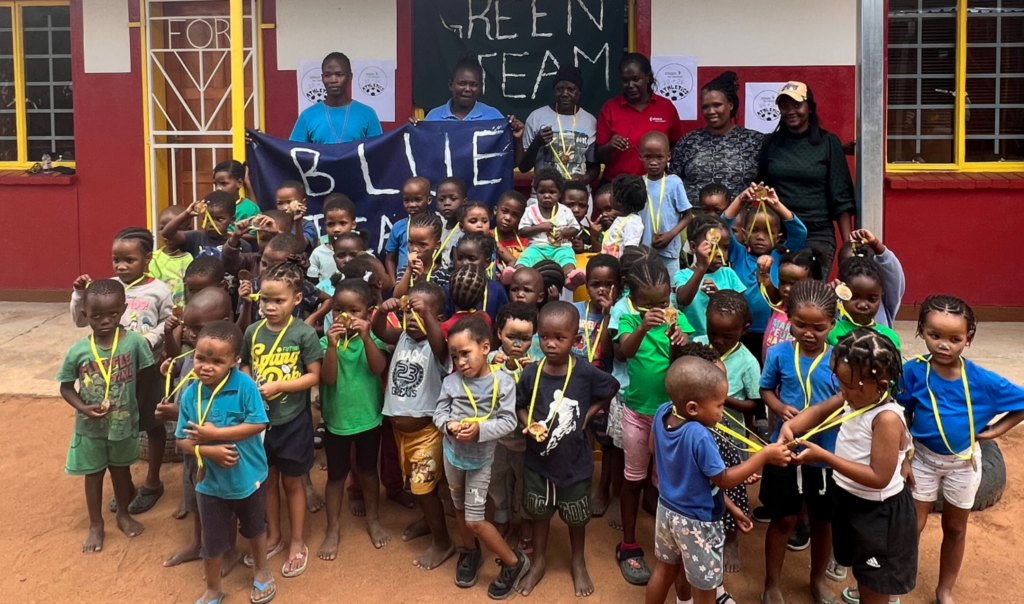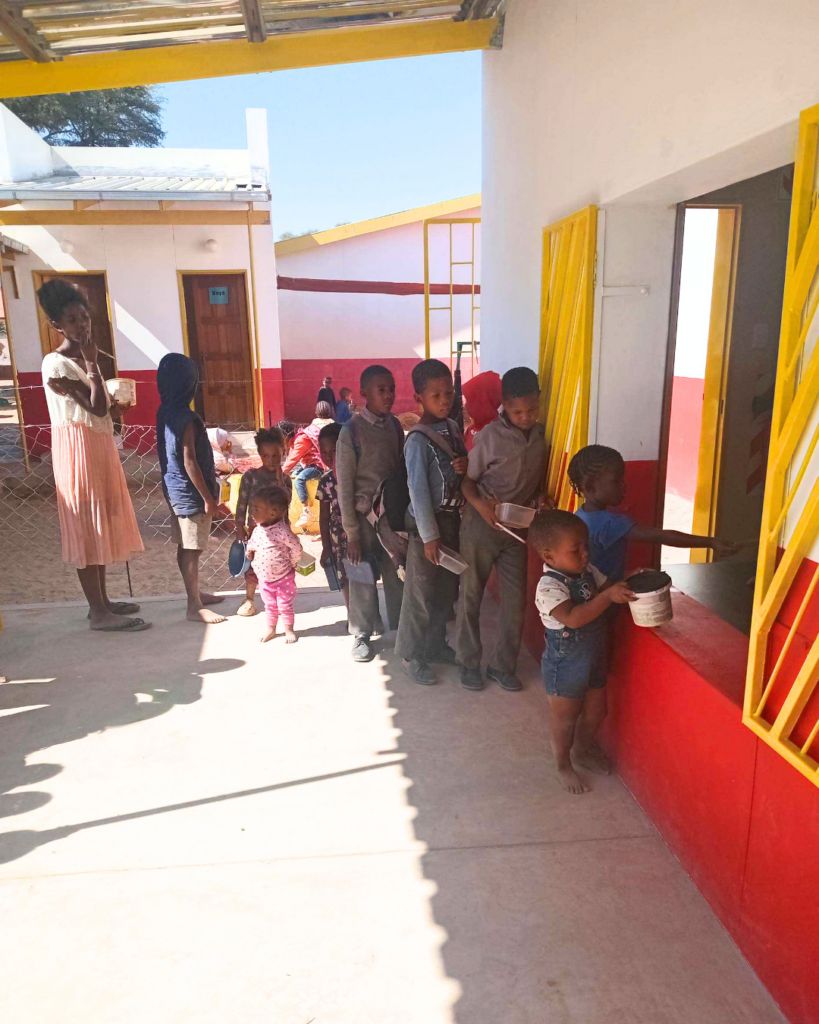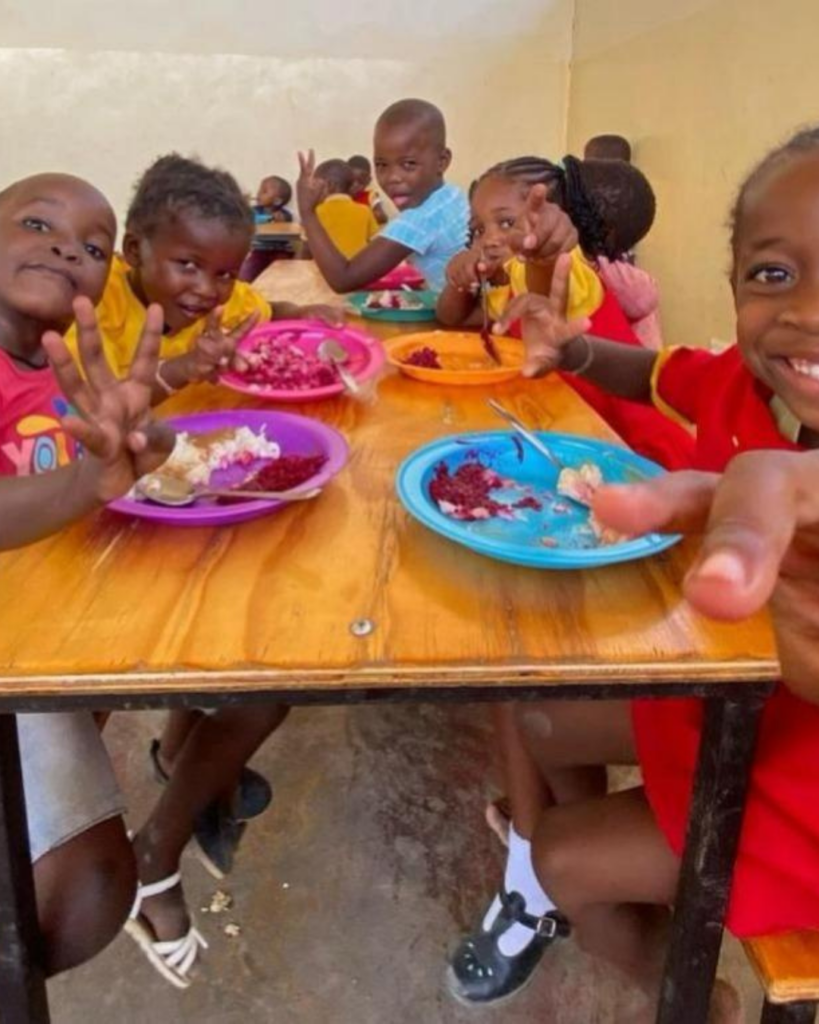
Dr. Michael Hoppe, Hamburg entrepreneur and foundation founder, shares his greatest lessons, his vision for steps for children and which moments of success still inspire him today in “6 Questions for Dr. Michael Hoppe”.
What is the biggest difference between your years as a successful entrepreneur and your work as a board member of your own foundation?
As an entrepreneur, I had a 50+ hour week and very good pay. Today, as a board member of the foundation, I work even more, but without pay, but more meaningfully!
As an entrepreneur, I looked at the balance sheet at the end of the year to see what financial success I had. Today, I look at the end of the year to see what social success we have had: how many young people have been able to complete their matric (comparable to the German Abitur) and are about to go to university, how many pupils have been able to improve their school results with our help, have been promoted or have even received awards. How many families have been able to live without abject poverty. How many additional people have we been able to help with food or meals in our soup kitchens in today's very difficult situation? How many jobs have we created, how many people have been given back their dignity?.
It is a different feeling to look into the laughing eyes of children in our projects than to have satisfied customers!
What was your greatest moment of success?
I was particularly inspired by the first Guardian Angel children who passed their matric in 2020 and then began studying. This is compelling evidence that our Guardian Angel program is sustainable and successful, and that we are on the right path to enabling children and young people to have opportunities for a self-determined future.
Another recent moment of success was that, despite the critical crisis situation in Namibia, we were able to retain and continue paying all employees. We were also able to ensure the provision of food for our steps children and young people, as well as additionally supply all family members with basic foodstuffs and meals from our soup kitchens or, where necessary, with food packages.
A major success of our Guardian Angel program is that female Guardian Angel children, despite pregnancy and domestic violence during the lockdown, continued to attend school and come to our projects, instead of staying at home “as usual” and taking the path into lasting poverty due to a lack of education.
And of course, the many awards show that our work is seen and appreciated.

What surprised you during the development of steps for children?
When I started the foundation and the first project 15 years ago, I assumed that we would leave it at that one project and slowly grow there. On the one hand, however, the vision of independence from donations convinced so many donors, including larger ones, that we soon had the opportunity to think about additional projects. On the other hand, word quickly spread in Namibia that there was “someone” who was doing a great deal to support children and young people, and requests for cooperation came from all corners of the country.
Nearly all senior employees and project managers approached us on their own initiative. I hardly had to make any effort.
I was pleasantly surprised by the warmth and initiative of the people in Zimbabwe. When I visited the communities we might want to support in the future for the first time, there was already a great deal of singing and joy.

On my next visit after the start of our cooperation, the residents welcomed me with dancing, singing, live chickens, banana plants, eggs and homemade honey. I felt like a member of a large family. The people were brimming with joy and gratitude. The participants in the projects showed independent activities that were unusual to me in order to complete the projects more quickly and cost-effectively—for example, thousands of bricks were fired in a self-built kiln, the soil for the fishponds was excavated by hand and shovel, and the plantations for the bananas were prepared by hand, etc.
Especially the consistency of so many donors, some of whom have been involved for nearly 16 years and always provide financial support. It grew into a large community of supporters who help wholeheartedly and sustainably, and many partnerships with companies have existed for more than ten years.
When you think about the last 16 years of steps, what critical moments were there?
14 years ago, we planted 1.640 olive trees with the prospect that, after the olives had grown and been harvested, processed and sold in the steps project in Okakarara, we would become independent of donations. After an error in the application of fertiliser caused over 80 % of the plants to die, I saw the dream of independence from donations shattered.
During the coronavirus pandemic in Namibia, several employees died and income from the guesthouses was almost zero; the rental apartments sometimes remained empty for a long time because the income situation of most people in Namibia had deteriorated significantly. The question arose of how we could master and survive these situations. We are constantly working on solution strategies.
What was your biggest learning?
- That despite many delays and laborious procedures, many things are somehow achieved in the end. Often somewhat differently than planned, but nevertheless they are achieved.
- Cooperation is a long learning process that is still ongoing. The people and employees we work with live in a completely different culture—not better and not worse—and we can only achieve something by understanding and engaging with this culture. Trying to impose our own perspective fails miserably.
- We can also learn a lot from our colleagues in Namibia and Zimbabwe: live more „in the here and now“ and don't always think about the problems of tomorrow (some of which won't even materialise)

What is your vision for the future?
Above all, I want to achieve independence from donations through sufficient income from the income-generating small businesses in the steps projects. That is my biggest dream.
In the future, I hope that even more guardian angel children will complete their matric and study or complete another vocational training programme with our support.
Another dream is that Guardian Angel children who have now begun studying will return to the projects after graduating as employees or perhaps even as leaders. They will then be examples of a successful educational journey and can motivate the steps children of future generations and give them courage.
The introduction of a minimum income for all employees at steps for children is another path we would like to take. This would allow us to set an example for other projects and fundamentally improve living conditions.
At some point, steps for children in Namibia will be able to offer everything from childhood to job opportunities from a single source.

DONATE NOW
Support Michael Hoppe’s vision with a donation.
DONATE
Facebook
LinkedIn
Pinterest
WhatsApp